Be a NURSE Your Country Needs You
Cart (0)

Cervical Cancer – 2nd Year GNM Medical Surgical Nursing II, Oncology Nursing(Definition,Etiology,Sign & Symptoms,Diagnosis,Treatment & Prevention)

Cervical cancer educational topics listed

Cervical Cancer


🔎Definition:

Cervical cancer is the abnormal cell growth or proliferation cell of any part of the cervix or on the wall of the cervix.
Cervical Cancer - 2nd Year GNM Medical Surgical Nursing II, Oncology Nursing(Definition,Etiology,Sign & Symptoms,Diagnosis,Treatment & Prevention)

🤔Etiology/Causes:

Cancer is an idiopathic disease, it has not any particular or proper causes but most cervical cancer is caused by HPV (Human Papillomavirus) virus. HPV spread through sectual contact, multiple sex partner & unprotedcted sex.

⚠️Risk Factors:

Some common risk factors of the cancer of cervix are described bellow:

⇢Age – Old age person above 60 to 70 years are more prone to Cervical Cancer.⇢Chewing Tobacco – Chewing tobacco is a very bad habit that is not only a worst causes for Cervical Cancer but also for any other disease.

⇢Drinking Alcohol – Drinking alcohol is a risk factor for cancer.

⇢Multiple Sex Partner – Multiple sex partner and unprodected sex can causes Cervical Cancer.

⇢Family History – A past family history with Cervical cancer is a risk factor.

⇢Use sudden medication – Some type of medication and their side effects can leads to Cervical cancer.

⇢Nutritional deficiencies – Person with some nutritional deficiency may have the chances of Cervical cancer.

🤧Sign and Symptoms/ Clinical Manifestation:

Some common signs and symptoms that a woman may face during cervical cancer are:

  1. Unusual vaginal bleeding
  2. Painful sex
  3. Unpleasant vaginal smell
  4. Bleeding after menopause
  5. Irregular menstrual
  6. Leg pain
  7. Back pain
  8. Pelvic pain
  9. Weight loss
  10. Fatigue
  11. Painful Urination
  12. Blood in urine
  13. Urinary Incontinence(UI)

∞Stages:

Cancer of cervix or Cervical cancer stages are following:

▲Stage 0/Stage I: You have a single tumor in your Cervix.

▲Stage II: You have 2 or 3 tumors and it will be bigger in size than the first stage. The tumor may have spread to your blood vessels.

▲Stage III: In this stage, The tumor may have spread to your lymph nodes, large blood vessels or another organ.

▲Stage IV/Last Stage: In the last stage the cancer will spread to other organs in your body, such as your lungs or bones, as well as lymph nodes.

🩺Diagnostic Evaluations:

  1. History Collection
  2. Physical Examination
  3. Liver and Urine Function Test
  4. Blood Test
  5. Urine Test
  6. HPV Test
  7. Pap smear Test
  8. Imaging Test
    1. X-Ray of the pelvis
    2. CT KUB
    3. MRI
  9. Biopsy

🏥MANAGEMENT:

        ⇨ Medical Management:

Chemotherapy
Targeted Therapy
Immunotherapy

        ⇨ Surgical Management:

Hysterectomy
Laser Surgery
Cryosurgery
Pelvic Exenteration

        ⇨ Non-invasive Management:

Radiation Therapy

🛡️Prevention:

  • Get the HPV vaccine ( After 15 and before 45 age).
  • Use condoms or other barrier methods when you have sex.
  • Limit your sexual partners.
  • Stop smoking and using tobacco products.

Colon Cancer – 2nd Year GNM Medical Surgical Nursing II, Oncology Nursing(Definition,Etiology,Sign & Symptoms,Diagnosis,Treatment & Prevention)

Educational graphic on colon cancer

COLON CANCER


🔎Definition:

Abnormal cell growth or cell division in the colon or rectal area. It is also known as colorectal cancer.
Colon Cancer - Definition,Etiology,Sign & Symptoms,Diagnosis,Treatment & Prevention

🤔Etiology/Cause:

1. Due to abnormal cell growth at the lining of the colon.

2. Due to infection in the colon.

3. Genetic cause or abnormal mutation in DNA.

⚠️Risk Factor:

⇢Sex– Males are more often affected with hepatocellular carcinoma (HCC) than females.

⇢Previous family history– Some people with past family history of liver cancer have a increase risk for liver cancer

⇢Genetic cause– Liver cancer happens when liver cells develop changes (mutations) in their DNA of cells.

⇢Age– Old age persons are more prone to liver cancer.

⇢Drink Alcohol– Drinking too much amount of alcohol is not good for health. It causes liver cirrhosis and later it transforms to hepatic cancer.

⇢Smoking – Is a greater cause of any type of cancer.

⇢Some medication– some oral contraceptive pills also be a risk factor.

🤧 Signs and Symptoms/ Clinical Manifestation:

1. Diarrhea of Constipation

2. Narrow stool

3. Rectal Bleeding

4. Pain or gas in abdomen

5. Fatigue or weakness

6. Weight loss

7. Irritable bowel Syndrome  (IBS)

8. Anemia

𛲢Stages:

Hepatocellular carcinoma or Liver cancer stages are following:

▲Stage 0/Stage I: You have a single tumor in your liver.

▲Stage II: You have 2 or 3 tumors and it will be bigger in size then the first stage.The tumor may have spread to your blood vessels.

▲Stage III: In this stage, The tumor may have spread to your lymph nodes, large blood vessels or another organ.

▲Stage IV/Last Stage: In the last stage the cancer will spread to other organs in your body, such as your lungs or bones, as well as lymph nodes.

🩺Diagnostic Evaluation:

1. History Collection

2. Physical Examination

3. CBC (Complete Blood Test)

4. LFT

5. CT scan

6. MRI

7.  Chest Radiography

8. Abdominal Barium Study

9. Ultrasonography of the liver and abdomen

10. PET-CT Scan

11. Colonoscopy

12. Sigmoidoscopy

13. Biopsy

🏥Management:

  • Chemotherapy
  • Surgical management- Colectomy

🛡️Prevention:

Reduces exposure to a risk factor for colon cancer.
Stop smoking and alcoholism.
Take high fiber diet regularly.

Lung Cancer – 2nd Year GNM Medical Surgical Nursing II, Oncology Nursing(Definition,Etiology,Sign & Symptoms,Diagnosis,Treatment & Prevention)

LUNG CANCER


Lung Cancer : Definition,Etiology,Sign & Symptoms,Diagnosis,Treatment & Prevention

🔎Definition:

An abnormal cell growth that happens in the lung or any part of the lung is known as Lung Cancer.

🤔Etiology/Causes: 

The causes of cancer are mostly unknown that is why cancer is called as an idiopathic disease. The most common risk factors of Lung Cancer are described below.

⚠️Risk Factors:

1. Smoking

Smoking can be the main cause of any type of cancer. Especially in Lung Cancer smoking releases bad chemicals which can cause cancer. Smoking burns the alveoli of the lungs and damages our lungs totally.

2. Past history of Cancer

Patients with any past history of cancer or lung cancer can again got Lung Cancer.

3. Asbestos

Asbestos exposure is a leading cause of lung cancer. Inhalation of asbestos fibers can lead to the development of cancerous cells in the lungs over time, posing a serious health risk to individuals who have been exposed to this harmful mineral.

4. Radon exposure

Radon exposure, a radioactive gas released from soil and rocks, is a leading cause of lung cancer. When inhaled, it decays and emits harmful particles that damage lung tissues, increasing the risk of cancer.

5. Passive Smoking

Passive smoking, or secondhand smoke exposure, is a known cause of lung cancer. When non-smokers inhale tobacco smoke from others, they’re at increased risk due to carcinogens present in the smoke, leading to the development of lung cancer.

6. Air pollution

Air pollution is a significant cause of lung cancer, as exposure to harmful airborne particles and toxins, such as fine particulate matter and carcinogens, can damage lung tissue and lead to cancerous growths.

7. Genetic Causes

Genetic causes of lung cancer involve specific mutations or alterations in the DNA that can increase the risk of developing the disease. These genetic changes may affect cell growth, division, and repair mechanisms, leading to uncontrolled cell growth and tumor formation in the lungs.

8. Lung disease

Lung cancer is primarily caused by various factors, including smoking, exposure to secondhand smoke, environmental pollutants like radon and asbestos, genetic predisposition, and pre-existing lung diseases like chronic obstructive pulmonary disease (COPD).

🤧Sign and Symptoms/ Clinical Manifestation:

1. Hemoptysis

Hemoptysis is a symptom of lung cancer characterized by coughing up blood or blood-stained sputum.

2. Chest pain

Chest pain can be a sign of lung cancer, typically resulting from the tumor pressing on surrounding tissues or nerves. It may also indicate advanced disease or metastasis. Early diagnosis and medical evaluation are crucial for appropriate treatment and management.

3. Shortness of breath

Shortness of breath is a common symptom of lung cancer, often caused by tumors obstructing the airways or fluid accumulation in the lungs, leading to reduced lung function and oxygen intake.

4. Fatigue, weight loss

Lung cancer may present with fatigue and unexplained weight loss as common signs and symptoms. These can occur due to the cancerous growth interfering with normal body functions, leading to energy depletion and metabolic changes.

5. Respiratory infection

Respiratory infection may present as a sign and symptom of lung cancer, causing persistent cough, wheezing, shortness of breath, and chest pain. It is crucial to differentiate between benign infections and potential malignancies to ensure timely diagnosis and appropriate treatment.

𛲢Stages:

Hepatocellular carcinoma or Liver cancer stages are following:

▲Stage 0/Stage I: You have a single tumor in your liver.

▲Stage II: You have 2 or 3 tumors and it will be bigger in size then the first stage.The tumor may have spread to your blood vessels.

▲Stage III: In this stage, The tumor may have spread to your lymph nodes, large blood vessels or another organ.

▲Stage IV/Last Stage: In the last stage the cancer will spread to other organs in your body, such as your lungs or bones, as well as lymph nodes.

🩺Diagnostic Evaluations:

1. History Collection

Take patient’s personal history and professional histories to find the causes of Lung Cancer

2. Physical Examination

Check the physical examination to find any signs and symptoms.

3. Chest X-ray

Do the chest x-ray to find the condition of your chest.

4. CT scan

CT scan is an imaging test to help a clear image of the lungs that can find actual problems and stages.

5. Biopsy

The biopsy will help to detect the presence of benign growth of a tumor.

6. Pulmonary Function Test

Pulmonary tests can show the capacity and strength of the lungs.

🏥MANAGEMENT:

    ➢Medical Management

        ○Chemotherapy
        ○Targeted Therapy

    ➢Surgical Management

        ○Wedge resection
       ○Lobectomy
○Pneumonectomy

    ➢Other Treatment

        ○Radiation Therapy

Prostate Cancer- 2nd Year GNM Medical Surgical Nursing II, Oncology Nursing(Definition, Etiology, Sign & Symptoms, Stages, Diagnosis, Management, Complication & Prevention)

Illustration of prostate cancer

Prostate Cancer

prostate cancer definition, biology, clinical diagnosis, evaluation, management, and treatment.
Prostate Cancer

🔎Definition:

The prostate is a part of the male reproductive system which is present just below the bladder. Prostate Cancer is an abnormal cell division or cell of the prostate gland.

🤔Etiology/Cause:

There are not any particular reasons for any type of cancer. It basically happens due to the mutation of DNA in our cells. That is why cancer is called an idiopathic disease.

⚠️Risk Factors:

1. Older age

2. Black skin tone

3. Family history

4. Obesity

5. Low level of Vit. D.

6. Prostatitis: It is inflammation of the prostate gland 

7. Elevated blood level of testosterone.

🤧Signs and Symptoms/ Clinical Manifestation:

1. Weak & Interrupted Urine Flow 

2. Difficulty in passing urine.

3. Blood in Urine (Blood in urine)

4. Noctura

5. Dysuria

6. Pain in the pelvis

7. Lymphedema

𛲢Stages:

The stages of prostate cancer are the following:

▲Stage 0/Stage I: You have a single tumour in your prostate gland.

▲Stage II: You have 2 or 3 tumours and they will be bigger in size than the first stage. The tumour may have spread to your blood vessels.

▲Stage III: In this stage, The tumour may have spread to your lymph nodes, large blood vessels or another organ.

▲Stage IV/Last Stage: In the last stage the cancer will spread to other organs in your body, such as your lungs or bones, as well as lymph nodes.

🩺Diagnostic Evaluations:

1. History Collection: In history collection medical person or a nurse will check if there is any previous problem with the reproductive system.

2. Physical Examination: A nurse will check the physical condition of the person.

3. Digital Rectal Examination: In DRE a medical person inserts gloved and lubricated finger into the rectum.

4. MRI

5. CT Scan

6. Biopsy

🏥MANAGEMENT:

➦ Chemotherapy 

➦ Hormone therapy

➦ Prospectomy

😖Complication:

➦ Hemorrhage
➦ Metastasis of cancer
➦ Erectile dysfunction
➦ Infection
➦ Sextual Disorder

🛡️Prevention:

➦ Stop smoking
➦ Take Healthy diet
➦ Maintain Healthy weight and exercise regularly
➦ Stop smoking

Cancer of Larynx or Laryngeal Cancer – 2nd Year GNM Medical Surgical Nursing II, Oncology Nursing(Definition,Etiology,Sign & Symptoms,Diagnosis,Treatment & Prevention)

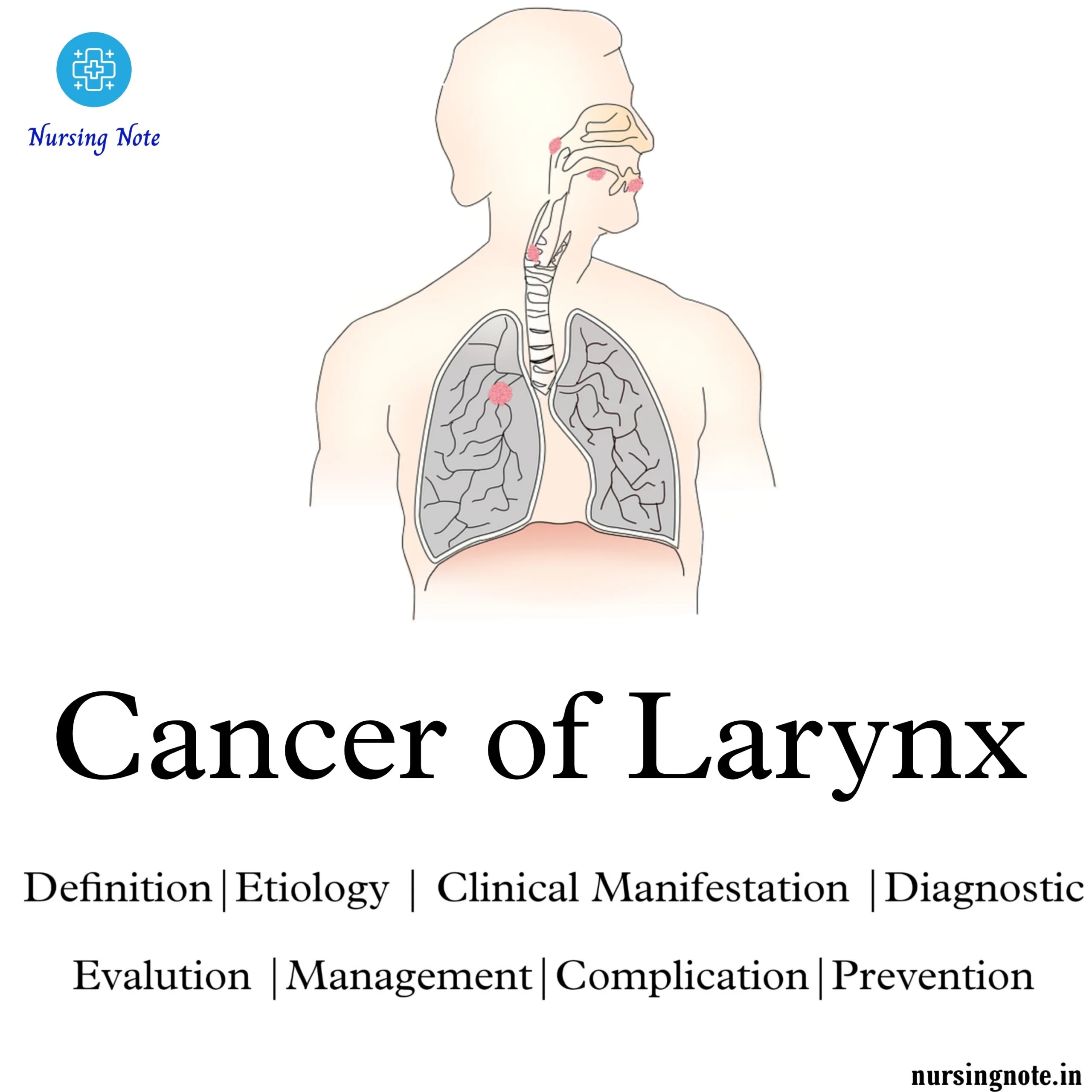
Cancer of Larynx or Laryngeal Cancer - 2nd Year GNM Medical Surgical Nursing II, Oncology Nursing(Definition,Etiology,Sign & Symptoms,Diagnosis,Treatment & Prevention)

CANCER OF LARYNX

Cancer of Larynx or Laryngeal Cancer - 2nd Year GNM Medical Surgical Nursing II, Oncology Nursing(Definition,Etiology,Sign & Symptoms,Diagnosis,Treatment & Prevention)

🔎Definition:

It’s defined as an abnormal or uncontrolled cell growth in any part of the larynx. It is also called Laryngeal Cancer.

🤔Etiology/Causes:

There are not any particular reasons for any types of cancer. It basically happens due to the mutation of DNA in our cells. That is why cancer is called an idiopathic disease.                             

⚠️Risk Factors:

Some common risk factors of the cancer of Larynx are described bellow:

⇢Age – Old age person above 60 to 70 years are more prone to Laryngeal Cancer.

⇢Chewing Tobacco – Chewing tobacco is a very bad habit that not only a worst causes for Laryngeal cancer but also for any other disease.

⇢Drinking Alcohol – Drinking alcohol is a risk factor for cancer.

⇢More risk for men – In surveys it is shown that male are more affected with Laryngeal Cancer as compared to the women.

⇢Chronic laryngitis – Untreated chronic laryngitis further can a cause for Laryngeal Cancer.

⇢Family History – A past family history with laryngeal cancer is a risk factor.

⇢Vocal Straining – Talking loudly like-singer, actor, teacher, public speaker who use their voice regularly may have vocal cord injury. This can lead to laryngeal cancer.

⇢Use sudden medication – Some type of medication and their side effects can leads to Laryngeal cancer.

⇢Nutritional deficiencies – Person with some nutritional deficiency may have the chances of laryngeal cancer.                    

🤧Sign and Symptoms/ Clinical Manifestation:

  1. Hoarseness
  2. Low pitched voice
  3. Difficulty in swallowing          
  4. Blood in spit
  5. Weight loss
  6. Fatigue
  7. Persistent cough
  8. Burning sensation
  9. Difficulty breathing
  10. Ear pain
  11. A sore throat
  12. A lump or sore that doesn’t heal    

𛲢Stages:

Cancer of Larynx or Laryngeal cancer stages are following:

▲Stage 0/Stage I: You have a single tumor in your Larynx.

▲Stage II: You have 2 or 3 tumors and it will be bigger in size than the first stage.The tumor may have spread to your blood vessels.

▲Stage III: In this stage, The tumor may have spread to your lymph nodes, large blood vessels or another organ.

▲Stage IV/Last Stage: In the last stage the cancer will spread to other organs in your body, such as your lungs or bones, as well as lymph nodes.

🩺Diagnostic Evaluations:

‣History collection              

‣Physical Examination

‣Endoscopy

‣Laryngoscopy

‣Biopsy

‣Imaging Tests

        X-ray
        CT scan
        MRI

‣Barium swallow or esophagogram – an Imaging test to show the abnormalities GI tract.

🏥MANAGEMENT:

⇒MEDICAL MANAGEMENT:-

5 Fluorouracil

Ibuprofen(Analgesic)

⇒SURGICAL MANAGEMENT:-

Partial Laryngectomy- Removal of half of the larynx

Total laryngectomy- Removal of full of larynx 

Cordectomy- Removes part or all off a vocal cord

Laser Surgery- Removes a tumor in a bloodless procedure

⇒Other Therapies:-       

Laser Beam- Using radiation it kills the cancer cells.

Chemotherapy – In this therapy chemotherapeutic medications are used to kill or slow the growth of cancer cells.

Immunotherapy – In this treatment health care providers improve our immune system to fight against cancer.

Targeted therapy- Cetuximab is a targeted cancer medicine. In this process medicine helps to stop the multiplication of particular cancer cells or targeted cancer cells.

😖Complication:

  • Spread of cancer
  • Larger tumour size
  • Increased pain and discomfort
  • Difficulty in treatment
  • Reduced quality of life

Liver Cancer – 2nd Year GNM Medical Surgical Nursing II, Oncology Nursing(Definition,Etiology,Sign & Symptoms,Diagnosis,Treatment & Prevention)

Illustration of liver cancer information

Liver Cancer

🔎Definition:

Liver cancer is also known as hepatic cancer, it is the abnormal cell growth or uncontrolled cell growth in liver or any part of liver.

Liver Cancer
Liver Cancer

🤔Etiology/Cause:

There is not any exact cause for any type of cancer that is why cancer is called as an idiopathic disease.

There are many chances of liver cancer which are described in the following as risk factors.

⚠️Risk Factor:

⇢Chronic infection by Hepatitis – Higher rates of liver cancer occur in those patients who have hepatitis B and C infection.

⇢Sex– Males are more often affected  with hepatocellular carcinoma (HCC) than females.

⇢Previous family history– some people with past family history of liver cancer have a increase risk for liver cancer

⇢Genetic cause-Liver cancer happens when liver cells develop changes (mutations) in their DNA of cells.

⇢Age– Old age person are more prone to liver cancer.

⇢Drink Alcohol– Drinking too much amount of alcohol is not good for health. It causes liver cirrhosis and later it transforms to hepatic cancer.

⇢Smoking – Is a greater cause for any types of cancer

Some medication- some oral contraceptive pill also be a risk factors

⇢Cirrhosis– Those person who have previous history of liver cirrhosis

⇢Aflatoxin– Aflatoxin exposure can lead to the development of HCC. The aflatoxins are a group of chemicals produced by the fungi Aspergillus flavus  and Aspergillus parasiticus.

⇢Bad Food Habit– Bad food habit and poor digestion can increase the chances for liver cancer

⇢Chemical Exposure– Certain chemical can also the causes for hepatic cancer

⇢Obesity and other metabolic disease can be the risk factor

🤧Sign and Symptoms/ Clinical Manifestation:

Nausea and vomiting

Sweating

Jaundice

Abdominal pain

Weakness

Fever

Diarrhoea

Splenomegaly – enlargement of spleen

Ascites – Excess abdominal fluid 

𛲢Stages:

Hepatocellular carcinoma or Liver cancer stages are following:

▲Stage 0/Stage I: You have a single tumor in your liver.

▲Stage II: You have 2 or 3 tumors and it will be bigger in size then the first stage.The tumor may have spread to your blood vessels.

▲Stage III: In this stage, The tumor may have spread to your lymph nodes, large blood vessels or another organ.

▲Stage IV/Last Stage: In the last stage the cancer will spread to other organs in your body, such as your lungs or bones, as well as lymph nodes.

🩺Diagnostic Evaluation:

  • History Collection
  • Physical Examination
  • CBC
  • LET(Liver Function Test) – To check if the enzyme, protein and other substance are working properly or not.
  • alpha-fetoprotein (AFT)– High levels of alpha-fetoprotein (AFP) in the blood can be found in many cases HCC
  • Ultrasound
  • CT scan & MRI
  • Angiography- A type of x-ray to show the blood vessles.
  • Biopsy

🏥Management:

  • Surgical Removal of tumor
  • Liver Transplantation – It is the process of placing a good and healthy liver from a healthy donor.
  • Heating Cancer cell- Killing cancer cells by controlled heat.
  • Freezing Cancer Cell- Shrinking malignant cells by too much cold temperature.
  • Injecting Alcohol into the tumor
  • Injecting Chemotherapy drug into cancer cell of liver 
  • Palliative Core

🛡️Prevention:

Reduces exposure to a risk factor for liver cancer.

Stop smoking and alcoholism.

Take healthy diet regularly.

Take vaccine against Hepatitis.


Brain Tumor – 2nd Year GNM Medical Surgical Nursing II, Oncology Nursing(Definition, Types, Etiology, Sign & Symptoms, Diagnosis,Treatment & Complication)

Brain Tumor

Brain tumours are a serious health problem. An untreated brain tumor can become brain cancer in further time. A short note about brain tumors is described below.


➩Definition:-

A brain tumor is a collection of abnormal cells in the brain.

➩Picture:-

A picture of a brain tumor
Brain Tumor


➩TYPE:-

Acoustic Neuroma: A non-cancerous tumor on the main nerve leading from the inner ear to the brain.

Chordoma: Chordoma is a slow growing cancer of tissue found inside the spine.

Craniopharyngioma: Craniopharyngiomas are rare brain tumors that usually form near the pituitary gland and the hypothalamus.

Germ cell tumor: Germ cell tumors are growths of cells that form from reproductive cells.

Gliomas: A type of tumor that occurs in the brain and spinal cord.

Medulloblastoma: Medulloblastoma is a brain tumor of the cerebellum.Medulloblastoma is the second most common brain tumor in children.

➩Etiology:-

There is no actual causes for any cancer that is why cancer is known as an idiopathic disease.

➩Risk Factor:- 

Exposure to radiation – People who are exposed to strong radiation.

Family History – If the patient have any family history of cancer or tumor.

Age – Old age people are most prone to it.

Head Injury – Any past history of head injury can leads to tumor and further go and make cancer.

Seizures

Some changes in DNA can increase the risk of tumor : Cowden Syndrome, Gorlin Syndrome

➩Symptoms:-

  1. Headache, although not always present, is most common in the early morning and is made worse by coughing, straining, or sudden movement.
  2. Nausea
  3. Seizure – A quick sudden abnormal electrical activity in brain cells.
  4. Vomiting
  5. Cognitive changes
  6. Vision change like blurred vision or doubled vision
  7. Papilledema (edema of the optic nerve)
  8. Speech change
  9. Confusion
  10. Memory loss
  11. Hearing problems
  12. Dizziness or sensation of a spinning world.

➩Diagnosis:-

  1. History Collection
  2. Physical Examination
  3. Neurological Examination
  4. Brain CT Scan
  5. MRI on Brain
  6. Angiogram [Diagnostic test which use x-ray show blood vessels]
  7. Biopsy: Taking cell from brain and checking inside the microscope that there is any malignant cells are present or not.
  8. Cerebrospinal Fluid Test
  9. PET ( Positron Emission Tomography )
  10. EEG

➩Treatment:-

▲Medical Method:-

  • Chemotherapy: A variety of medical treatments, including chemotherapy and external-beam radiation therapy, are used alone or in combination.
  • Targeted drug therapy

▲Surgery Method:-

Craniotomy – Remove a part of brain by making a small hole through operation

Endoscopic surgery: Surgery that uses a flexible tube (endoscope) with a light, camera and special instruments to access a tumor. We typically insert the scope through the nose to remove pituitary tumors.

▲Other Therapies:-

  • Radiation Therapy
  • Gene-transfer therapy
  • Brachytherapy (Brachytherapy is a type of radiation therapy use to shrink cancer cells.)

▲Nursing Management:-

  1. Check the general condition of the patient.
  2. Evaluate gag reflex and ability to swallow preoperatively.
  3. Teach the patient about health and healthy food
  4. Perform neurologic checks, monitor vital signs, and maintain a neurologic flow chart.
  5. Monitor patients with seizures.
  6. Check motor function at intervals
  7. Evaluate speech
  8. Assess eye movement, pupil size, and reaction.

➩Complication:-

Hydrocephalus [Excessive Cerebrospinal Fluid inside the brain]

Infection

Death

Cancer of Esophagus – 2nd Year GNM Medical Surgical Nursing II, Oncology Nursing(Definition,Etiology,Sign & Symptoms,Diagnosis,Treatment & Prevention)

Cancer of Esophagus

➦ Definition:-

It is an abnormal growth of squamous cell present in the lining of the esophagus.

Cancer of Esophagus - Definition,Etiology,Sign & Symptoms,Diagnosis,Treatment & Prevention
Cancer of Esophagus

➦ Risk Factors:-

  1. Gender (male)
  2. Race (African American)
  3. Age (greater risk in fifth decade of life)
  4. Geographic locale (much higher incidence in China and northern Iran)
  5. Chronic esophageal irritation
  6. Use of alcohol and tobacco
  7. Gastroesophageal Reflux Disease (GERD)
  8. Chronic ingestion of hot liquids or foods
  9. nutritional deficiencies poor oral hygiene
  10. exposure to nitrosamines(Organic chemical compound) in the environment or food

➦ Clinical Manifestations:-

  • Nausea
  • Vomiting
  • Dysphagia (Difficult or uncomfortable in swallowing)
  • Feeling of a lump in the throat and painful swallowing
  • Substernal pain or fullness regurgitation of undigested
  • food with foul breath and hiccups later
  • Hemorrhage
  • progressive loss of weight and strength

➦ Diagnostic Evaluation:-

  • History Collection
  • Physical Examination
  • Esophagogastroduodenoscopy (EGD)
  • CT
  • PET
  • Endoscopic ultrasound (EUS),
  • Exploratory laparoscopy
  • Biopsy

➦ Management:-

    ➤ Medical:-

There is no fixed curative medical management of cancer. Treatment of oesophagal cancer is directed toward a cure if the cancer is in the early stage.

    ➤ Surgical:-

Esophagectomy- Removal of esophagus

    ➤ Other Therapy:-

Radiation Therapy
Chemotherapy

➦ Nursing Management:-

1) Advice to avoid spicy food
2) Give more fluid to the Humidifier.
3) Provide medications as per doctor’s order
4) Check temperature, monitor vital signs
5) Check lab result

➦ Prevention:-

  1. Stop smoking
  2. Stop Alcohol Taking
  3. Maintain Proper oral hygiene

Oral Cancer – 2nd Year GNM Medical Surgical Nursing II, Oncology Nursing(Definition,Etiology,Sign & Symptoms,Diagnosis,Treatment & Prevention)

Oral Cancer

➦ Definition:-

It is the abnormal and uncontrolled cell growth and multiplication of cells in the oral cavity. Oral cancer includes cancer of lips cheek, floor of the mouth, soft palate of the mouth, sinuses and pharynx.
Oral Cancer - 2nd Year GNM Medical Surgical Nursing II
Oral Cancer

➦ Causes/Etiology:-

1) Tobacco Smoking
2) Excessive intake of alcohol
3) HPV-Human Papilloma Virus
4) Excessive Exposure in Sunlight
5) Genetic causes

➦ Stages:-

Stage I: Tumour make a lump formation in any part of the mouth.
Stage II: Cancer cells grow regularly and make bigger in size.
Stage III: Cancer spreads nearby organs only.
Stage IV: Cancer spread to the other part of the body.

➦ Clinical Manifestation:-

  1. Lumps or bumps formation.
  2. Swelling area on lips, gums or other areas inside the mouth.
  3. Unexpected bleeding in mouth.
  4. Unexpected numbness, loss of feeling or pain in the mouth cavity.
  5. Difficulties in swallowing or chewing
  6. Hoarseness
  7. Chronic sore throat
  8. A chong in the teeth
  9. Dramatic weight loss
  10. Ear pain

➦ Diagnostic Evaluation:-

1) History collection
2) Physical Examination
3) CT and MRI Scan
4) Biopsy

➦ Management:-

1) Radiation therapy
2) Chemotherapy
3) Maxillectomy
4) Mandibulectomy
5) Glossectomy
6) Combinational (Example – Glossectomy and Laryngectomy)

➦ Nursing Management:-

1) Advice to avoid spicy food.
2) Give more fluid for the Humidifier.
3) Provide analgesic
4) Check temperature, monitor vital signs,
5) Check lab result
6) Provide information to the patient and family of the patient about the procedure.

➦ Complication:-

1) Dysphagia

    2) Speck Speech problem
3) Changes to the appearance of the mouth

Prevention:-

  • Stop smoking
  • Stop Alcoholism
  • Toothbrush regularly
  • Go for a medical checkup if there is any complication.

Cancer – 2nd Year GNM Medical Surgical Nursing II, Oncology Nursing(Definition,Types,Diagnosis,Treatment and Prevention)

Cancer

CANCER

➦ Definition:-

Cancer is the abnormal cell growth or uncontrolled cell growth in any part of our body.
 

Cancer- A short note for GNM students
Cancer

Proliferation:-

is the main characteristic behind tumors and specially malignant ones. Calls growth continuously without being submitted to the local or general controle of the organisms.

➦ Type of Cancer:-

Doctors divide cancer into type based on where it begins. Four main type of cancer are:

  • Carcinomas: A carcinomas begins in the skin or the tissue that covers the surface of internal; organs or glands. carcinomas usually form solid tumours. They are most type of cancer. Example of carcinomas include prostate cancer breast cancer, lung cancer.
  • Sarcomas: A sarcoma begins in the tissues that support and connect the body. A sarcoma can develop in fat, muscles, nerves, tendons, joints, blood vessels, lymph vessels, cartilage, or bone.
  • Leukemias: Leukemia is a cancer of the blood. Leukemia begins when healthy blood cells change and grow uncontrollably. 

         The 4 main types of leukemia are:

                A. acute lymphocytic leukemia
                B. chronic lymphocytic leukemia
                C. acute myeloid leukemia
                D. chronic myeloid leukemia.

  • Lymphomas: Lymphoma is a cancer that begins in the lymphatic system. The lymphatic system is a network of vessels and glands that help fight infection. There are 2 main types of lymphomas: Hodgkin lymphoma and non-Hodgkin lymphoma.

➦ Diagnosing cancer:-

  • History Collection
  • Physical Examination
  • Imaging Test( X-ray, CT Scan, MRI)
  • colonoscopy
  • Biopsy
  • Mammography
  • Pap Smear Test
  • Papnicolanu’s text
  • Stools Or occult blood
  • Sigmoidoscopy
  • Colonoscopy
  • BSE (Breast Self Examination)
  • TSE (Testicular Self Examination)
  • Skin infection

➦ Treatment:-

  • Chemotherapy
  • Radiation Therapy
  • Hormone Therapy
  • Surgical Method
  • Stem cell transplant (bone marrow transplant)
  • Immunotherapy

➦ Prevention:-

  1. Stop smoking
  2. Stop Alcoholism
  3. Take healthy diet daily
  4. Keep away from radiation exposure
  5. Do daily exercises
  6. Do yoga & Meditation

NursingNote.IN

NursingNote is a trusted platform for GNM & Nursing students, providing exam-oriented notes, PDFs, question papers, and career guidance to help you succeed confidently.

Quick Links

Legal