Be a NURSE Your Country Needs You
Cart (0)

Cervical Cancer – 2nd Year GNM Medical Surgical Nursing II, Oncology Nursing(Definition,Etiology,Sign & Symptoms,Diagnosis,Treatment & Prevention)

Cervical cancer educational topics listed

Cervical Cancer


🔎Definition:

Cervical cancer is the abnormal cell growth or proliferation cell of any part of the cervix or on the wall of the cervix.
Cervical Cancer - 2nd Year GNM Medical Surgical Nursing II, Oncology Nursing(Definition,Etiology,Sign & Symptoms,Diagnosis,Treatment & Prevention)

🤔Etiology/Causes:

Cancer is an idiopathic disease, it has not any particular or proper causes but most cervical cancer is caused by HPV (Human Papillomavirus) virus. HPV spread through sectual contact, multiple sex partner & unprotedcted sex.

⚠️Risk Factors:

Some common risk factors of the cancer of cervix are described bellow:

⇢Age – Old age person above 60 to 70 years are more prone to Cervical Cancer.⇢Chewing Tobacco – Chewing tobacco is a very bad habit that is not only a worst causes for Cervical Cancer but also for any other disease.

⇢Drinking Alcohol – Drinking alcohol is a risk factor for cancer.

⇢Multiple Sex Partner – Multiple sex partner and unprodected sex can causes Cervical Cancer.

⇢Family History – A past family history with Cervical cancer is a risk factor.

⇢Use sudden medication – Some type of medication and their side effects can leads to Cervical cancer.

⇢Nutritional deficiencies – Person with some nutritional deficiency may have the chances of Cervical cancer.

🤧Sign and Symptoms/ Clinical Manifestation:

Some common signs and symptoms that a woman may face during cervical cancer are:

  1. Unusual vaginal bleeding
  2. Painful sex
  3. Unpleasant vaginal smell
  4. Bleeding after menopause
  5. Irregular menstrual
  6. Leg pain
  7. Back pain
  8. Pelvic pain
  9. Weight loss
  10. Fatigue
  11. Painful Urination
  12. Blood in urine
  13. Urinary Incontinence(UI)

∞Stages:

Cancer of cervix or Cervical cancer stages are following:

▲Stage 0/Stage I: You have a single tumor in your Cervix.

▲Stage II: You have 2 or 3 tumors and it will be bigger in size than the first stage. The tumor may have spread to your blood vessels.

▲Stage III: In this stage, The tumor may have spread to your lymph nodes, large blood vessels or another organ.

▲Stage IV/Last Stage: In the last stage the cancer will spread to other organs in your body, such as your lungs or bones, as well as lymph nodes.

🩺Diagnostic Evaluations:

  1. History Collection
  2. Physical Examination
  3. Liver and Urine Function Test
  4. Blood Test
  5. Urine Test
  6. HPV Test
  7. Pap smear Test
  8. Imaging Test
    1. X-Ray of the pelvis
    2. CT KUB
    3. MRI
  9. Biopsy

🏥MANAGEMENT:

        ⇨ Medical Management:

Chemotherapy
Targeted Therapy
Immunotherapy

        ⇨ Surgical Management:

Hysterectomy
Laser Surgery
Cryosurgery
Pelvic Exenteration

        ⇨ Non-invasive Management:

Radiation Therapy

🛡️Prevention:

  • Get the HPV vaccine ( After 15 and before 45 age).
  • Use condoms or other barrier methods when you have sex.
  • Limit your sexual partners.
  • Stop smoking and using tobacco products.

GNM Previous Year Question Paper of Medical Surgical Nursing 1 Short Question and Answer for GNM 2nd Year

GNM Previous Year Question Paper of Medical Surgical Nursing 1 Short Question and Answer for GNM 2nd Year

Medical Surgical Nursing 1 Previous Year Short Question with Answer


Fill in the blanks:

1. Normal level of potassium in the blood is _____________
➡3.6 to 5.2 (mmol/L)
2. Presence of protein in the urine is called as ______________
➡Proteinuria
3. Difficulty in swallowing is called as ________________
➡Dysphagia
4. Abnormal accumulation of fluid in the peritoneal cavity is called as _______________
➡Ascites

5. __________ is the inflammation of the Gums
➡ Gangivitis
6. Decrease level of potassium in the blood is called as __________
➡Hypokalemia
7. __________ is Inflammation of the gall bladder
➡Cholecystitis
8. ______________is a sudden temporary loss of consciousness
➡Syncope / Fainting
9. Presence of protein in urine is called as ___________
➡ Proteinuria
10. Incrcase in serum sodium level is called __________
➡ Hypernatremia
11. Difficulty in swallowing is called __________
➡ Dysphagia
12. _________ position will be an ideal for perineal and rectal surgeries
➡ Lithotomy
13. Otoscope is used to examine________________
➡ Ear
14. Rheumatoid arthritis mainly affects________________
➡ Joint
15. An example for Autoimmune disease is________________
➡ Systemic Lupus Erythematosus
16. Collapse of the lung is called as ___________
➡ Pneumothorax
17. Decrease in the number of platelets is known as ____________
➡ Thrombocytopenia
18. Normal level of Sodium in blood is _________
➡ 135-145 mEq/L
19. Epistaxis means __________
➡ Nose bleeding
20. Yellowish discolouration of the skin is found in________________
➡ Jaudice
21. The following instrument is used for the examination of eye________________
➡ Ophthalmoscopy
22. Salt is restricted to the patient with________________

➡ Hypertension
23. Normal serum calcium level is ____________
➡ 8.5 to 10.5 mg/dl
24. Instrument used to check reflex is ___________
➡ Reflex hammer
25. Spinal anaesthesia is a type of __________ anaesthesia
➡  Regional Anaesthesia
26. Antibody mediated immunity is also called as __________
➡Humoral immunity
27. The first cranial nerve is________________
➡Olfactory
28. The procedure used to visualise internal organs is________________
➡Endoscope
29. Blood in the sputum is termed as________________
➡Haemoptysis
30. Deceased potassium level in the blood is called _________
➡ Hypokalemia
31. Inflammation of the lining of the stomach is called _________
➡ Gastritis
32. Inflammation of the nose is called _________
➡ Rhinitis
33. An artificial device used to replace a missing body part such as a limb or heart valve is ___________
➡ Prosthesis
34. Master gland of the body is________________
➡ Pituitary gland
35. Total number of cranial nerves are________________
➡ 12 pairs
36. Position used for surgeries on the spinal cord ________________
➡ Prone
37. An abnormal connection between the organ is called as ___________
➡ Fistula
38. Paracetamol is a _____________ drug
➡ Antipyretic
39. Inflammation of the gall bladder is called _____________
➡ Cholecystitis
40. Normal concentration of potassium in serum is ___________
➡ 3.5 to 5.5 mEq/L
41. Decreased pulse rate is termed as ________________
➡ Bradycardia
42. HS means ________________
➡ At Bedtime
43. Gastric juice contain ________________
➡ Pepsin lipase and Renin
44. An abnormal decrease in the number of platelets is called ____________
➡ Thrombocytopenia
45. Inflammation of the lung parenchyma is termed as ____________
➡ Pneumonitis
46. The action of paracetamol drug is ____________
➡ Analgesic and antipyretic drug
47. ____________ position is ideal for perineal and rectal surgeries
➡ Lithotomy
48. Decreased potassium level in blood is termed as ________________
➡ Hypokalaemia
49. Salt is restricted to a patient with ________________
➡ Oedema
50. Drug used in Epilepsy is ________________
➡ Eptoin
51. __________ is the enlargement of the Liver
➡ Hepatomegaly
52. Decreased sodium level in the body is called as ________
➡ Hyponatremia
53. Tuberculosis is caused by _________
➡ Mycobacterium tuberculosis
54. ___________ is the Increase of the number of cells resulting from increased cellular division
➡ Proliferation
55. ___________ is the inflammation of the gums
➡ Gangivitis
56. Decrease secretion of antidiuretic hormone causes _________
➡ Diabetes insipidus
57. Antidote of Heparin is ________________
➡ Protamine sulphate
58. The following chemical is used for fumigation of operation theatre ________________
➡ Formaldehyde
59. The following instrument is used for the examination of Bladder ________________
➡ Cystoscope
60. Normal pH of blood is ___________
➡ 7.35 to 7.45
61. Collection of pus in pleural cavity is called __________
➡ Empyema
62. Collapse of lungs is called as ____________
➡ Pneumothorax
63. An abnormal decrease in the number of platelets of platelets is called _____________
➡ Thrombocytopenia
64. Senior citizen’s day is celebrated on ____________
➡ August 21
65. Dyspnoea is released in ________ position
➡ Upright position
66. Fat consumption in elderly should be ___________
➡ 20-35% of their daily calories
65. Pain is _________ vital sign
➡ 5th
66. Normal value of calcium is ____________
➡ 8.6 to 10.3 mg/dL
67. Suture materials used for tendons __________
➡ Catgut
68. The first India Medical Physician is ____________
➡ Anandi Bai Joshi
69. The normal BUN level is __________
➡ About 7 and 20 mg/dL
70. When the Lasix is administered to patient ___________ is given as a supplement
➡ Potassium
71. The purpose of post-operative deep breathing coughing exercises are to prevent _________
➡ Pneumonia
72. Decreased level of potassium in the blood is called as __________
➡ Hypokalemia
73. Disengagement theory explains about _________
➡ Ageing
74. Dyspnoea is relived in _________
➡ Upright position
75. Damage to the air sacs in the lungs is called as:
➡Emphysema.
76. Inflammation and infection of the salivary gland is known as:
➡Sialadenitis.
77. ___________ are abnormal enlarged veins in the lower part of the esophagus:
➡Esophageal varices.
78. Formation of stone in the gall bladder is known as:
➡ Cholelithiasis.

Read More: Mental Health Nursing Previous Year Short Question with Answer

[FREE PDF] Karnataka GNM All Year Question Paper 2024 – Official KNC

GNM exam question paper PDF cover

GNM Nursing Question Paper PDF Download 2024

GNM (General Nursing and Midwifery) is a 3 year based diploma course offered by INC (Indian Nursing Council) and approved by the State Nursing Board.
Karnataka Nursing Council, state diploma in nursing counsil normally holds the annual nursing examination for GNM in the month of August but due to some reason the exam was delayed and the exam was conducted in the month of January of the next year (2024).Download gnm question paper 2024. Download gnm previous year question paper Karnataka in this site. There are gnm nursing question paper 1st year pdf karnataka 2024 available pdf, You can get karnataka gnm nursing question paper 2nd year pdf download and There are the question paper of gnm 3rd year to download in pdf.You can easily get karnataka gnm nursing question paper 1st year pdf download 2024.
GNM Annual Exam Question Paper 2024 (KNC)

Examination Details

  • FULL MARKS: 70
  • TIME: 3 Hours
  • DATE: 02-01-2024 TO 06-01-2024
  • Visit the Examination board Official Website: ksdneb.org

Read More: GNM Supplementary Exam Question Paper August- 2024

Download PDF GNM Question Paper 2024:

YEAR

SUBJECT

DOWNLOAD LINK

FIRST YEAR 

Bio-Science

  • (Anatomy and Physiology
  • Microbiology)

CLICK HERE

Behavioural Sciences

  • (Psychology
  • Sociology)

CLICK HERE

Nursing Foundations

  • (Fundamentals of Nursing
  • First Aid)

CLICK HERE

Community Health Nursing

  • (Community Health Nursing – I
  • Environmental Hygiene
  • Health Education and Communication skills
  • Nutrition)


CLICK HERE

SECOND YEAR

Medical Surgical Nursing – I

CLICK HERE

Medical Surgical Nursing – II

CLICK HERE

Mental Health Nursing

CLICK HERE

Child Health Nursing

CLICK HERE

THIRD YEAR

Midwifery and Gynecological Nursing

  • (Midwifery
  • Gynecologial Nursing)

CLICK HERE

Community Health Nursing – II

CLICK HERE

Read: Write a short note about Nationa Health Policy (2002), 3rd Year GNM,Community Health Nursing – II

Colon Cancer – 2nd Year GNM Medical Surgical Nursing II, Oncology Nursing(Definition,Etiology,Sign & Symptoms,Diagnosis,Treatment & Prevention)

Educational graphic on colon cancer

COLON CANCER


🔎Definition:

Abnormal cell growth or cell division in the colon or rectal area. It is also known as colorectal cancer.
Colon Cancer - Definition,Etiology,Sign & Symptoms,Diagnosis,Treatment & Prevention

🤔Etiology/Cause:

1. Due to abnormal cell growth at the lining of the colon.

2. Due to infection in the colon.

3. Genetic cause or abnormal mutation in DNA.

⚠️Risk Factor:

⇢Sex– Males are more often affected with hepatocellular carcinoma (HCC) than females.

⇢Previous family history– Some people with past family history of liver cancer have a increase risk for liver cancer

⇢Genetic cause– Liver cancer happens when liver cells develop changes (mutations) in their DNA of cells.

⇢Age– Old age persons are more prone to liver cancer.

⇢Drink Alcohol– Drinking too much amount of alcohol is not good for health. It causes liver cirrhosis and later it transforms to hepatic cancer.

⇢Smoking – Is a greater cause of any type of cancer.

⇢Some medication– some oral contraceptive pills also be a risk factor.

🤧 Signs and Symptoms/ Clinical Manifestation:

1. Diarrhea of Constipation

2. Narrow stool

3. Rectal Bleeding

4. Pain or gas in abdomen

5. Fatigue or weakness

6. Weight loss

7. Irritable bowel Syndrome  (IBS)

8. Anemia

𛲢Stages:

Hepatocellular carcinoma or Liver cancer stages are following:

▲Stage 0/Stage I: You have a single tumor in your liver.

▲Stage II: You have 2 or 3 tumors and it will be bigger in size then the first stage.The tumor may have spread to your blood vessels.

▲Stage III: In this stage, The tumor may have spread to your lymph nodes, large blood vessels or another organ.

▲Stage IV/Last Stage: In the last stage the cancer will spread to other organs in your body, such as your lungs or bones, as well as lymph nodes.

🩺Diagnostic Evaluation:

1. History Collection

2. Physical Examination

3. CBC (Complete Blood Test)

4. LFT

5. CT scan

6. MRI

7.  Chest Radiography

8. Abdominal Barium Study

9. Ultrasonography of the liver and abdomen

10. PET-CT Scan

11. Colonoscopy

12. Sigmoidoscopy

13. Biopsy

🏥Management:

  • Chemotherapy
  • Surgical management- Colectomy

🛡️Prevention:

Reduces exposure to a risk factor for colon cancer.
Stop smoking and alcoholism.
Take high fiber diet regularly.

Lung Cancer – 2nd Year GNM Medical Surgical Nursing II, Oncology Nursing(Definition,Etiology,Sign & Symptoms,Diagnosis,Treatment & Prevention)

LUNG CANCER


Lung Cancer : Definition,Etiology,Sign & Symptoms,Diagnosis,Treatment & Prevention

🔎Definition:

An abnormal cell growth that happens in the lung or any part of the lung is known as Lung Cancer.

🤔Etiology/Causes: 

The causes of cancer are mostly unknown that is why cancer is called as an idiopathic disease. The most common risk factors of Lung Cancer are described below.

⚠️Risk Factors:

1. Smoking

Smoking can be the main cause of any type of cancer. Especially in Lung Cancer smoking releases bad chemicals which can cause cancer. Smoking burns the alveoli of the lungs and damages our lungs totally.

2. Past history of Cancer

Patients with any past history of cancer or lung cancer can again got Lung Cancer.

3. Asbestos

Asbestos exposure is a leading cause of lung cancer. Inhalation of asbestos fibers can lead to the development of cancerous cells in the lungs over time, posing a serious health risk to individuals who have been exposed to this harmful mineral.

4. Radon exposure

Radon exposure, a radioactive gas released from soil and rocks, is a leading cause of lung cancer. When inhaled, it decays and emits harmful particles that damage lung tissues, increasing the risk of cancer.

5. Passive Smoking

Passive smoking, or secondhand smoke exposure, is a known cause of lung cancer. When non-smokers inhale tobacco smoke from others, they’re at increased risk due to carcinogens present in the smoke, leading to the development of lung cancer.

6. Air pollution

Air pollution is a significant cause of lung cancer, as exposure to harmful airborne particles and toxins, such as fine particulate matter and carcinogens, can damage lung tissue and lead to cancerous growths.

7. Genetic Causes

Genetic causes of lung cancer involve specific mutations or alterations in the DNA that can increase the risk of developing the disease. These genetic changes may affect cell growth, division, and repair mechanisms, leading to uncontrolled cell growth and tumor formation in the lungs.

8. Lung disease

Lung cancer is primarily caused by various factors, including smoking, exposure to secondhand smoke, environmental pollutants like radon and asbestos, genetic predisposition, and pre-existing lung diseases like chronic obstructive pulmonary disease (COPD).

🤧Sign and Symptoms/ Clinical Manifestation:

1. Hemoptysis

Hemoptysis is a symptom of lung cancer characterized by coughing up blood or blood-stained sputum.

2. Chest pain

Chest pain can be a sign of lung cancer, typically resulting from the tumor pressing on surrounding tissues or nerves. It may also indicate advanced disease or metastasis. Early diagnosis and medical evaluation are crucial for appropriate treatment and management.

3. Shortness of breath

Shortness of breath is a common symptom of lung cancer, often caused by tumors obstructing the airways or fluid accumulation in the lungs, leading to reduced lung function and oxygen intake.

4. Fatigue, weight loss

Lung cancer may present with fatigue and unexplained weight loss as common signs and symptoms. These can occur due to the cancerous growth interfering with normal body functions, leading to energy depletion and metabolic changes.

5. Respiratory infection

Respiratory infection may present as a sign and symptom of lung cancer, causing persistent cough, wheezing, shortness of breath, and chest pain. It is crucial to differentiate between benign infections and potential malignancies to ensure timely diagnosis and appropriate treatment.

𛲢Stages:

Hepatocellular carcinoma or Liver cancer stages are following:

▲Stage 0/Stage I: You have a single tumor in your liver.

▲Stage II: You have 2 or 3 tumors and it will be bigger in size then the first stage.The tumor may have spread to your blood vessels.

▲Stage III: In this stage, The tumor may have spread to your lymph nodes, large blood vessels or another organ.

▲Stage IV/Last Stage: In the last stage the cancer will spread to other organs in your body, such as your lungs or bones, as well as lymph nodes.

🩺Diagnostic Evaluations:

1. History Collection

Take patient’s personal history and professional histories to find the causes of Lung Cancer

2. Physical Examination

Check the physical examination to find any signs and symptoms.

3. Chest X-ray

Do the chest x-ray to find the condition of your chest.

4. CT scan

CT scan is an imaging test to help a clear image of the lungs that can find actual problems and stages.

5. Biopsy

The biopsy will help to detect the presence of benign growth of a tumor.

6. Pulmonary Function Test

Pulmonary tests can show the capacity and strength of the lungs.

🏥MANAGEMENT:

    ➢Medical Management

        ○Chemotherapy
        ○Targeted Therapy

    ➢Surgical Management

        ○Wedge resection
       ○Lobectomy
○Pneumonectomy

    ➢Other Treatment

        ○Radiation Therapy

GNM Previous Year Question Paper of Child Health Nursing Short Question and Answer for GNM 2nd Year

 Child Health Nursing Previous Year Short Question with Answer


A Thumbnail Previous Year Short Question with Answer Child Health Nursing

Fill in the blanks:

1. Purulent discharge from the eyes of new bom is known as___________.

➥ Opthalmia neonatorun

2. Baby attain the social smile by the age of_______ months.

➥ Three

3. First permanent tooth will erupt at the age of____________.

➥ Six years

4. According to WHO the normal birth weight of the baby is______________.

➥ 2.7 to3.1 kg 

5. Normal Apgar score of a new born is___________.

➥ 8-10

6. Startle relax can be elicitated by_____________.

➥ A sudden loud noise

7. The comfortable position for a four year old child with cyanotic spell is_______________. 

➥ Emi-setting position.

8. Ascariasis is caused by________________.

➥ Parasitic roundworm (Ascaris lumbricoides)

9. Phototherapy is used in case of________

➥ Neonatal jaundice

10. Lobar pneumonia affects the____________.

➥ Parenchyma of the lung

11. Wilm’s Tumour is the Tumour of the__________.

➥ Kidneys

12. Decreased calcium in the blood causes__________.

➥ Hypocalcaemia

13. Whooping cough is caused by____________.

➥ Bordetella Pertussis

14. An example for invasive method of oxygen administration is____________.

➥ Endotracheal administration.

15.  ___________operation is performed in children with projectile vomiting.

➥ Pyloromyotomy

 16. Ameobiasis infection is caused by protozoa known as___________.

➥ Entameoba histolytica 

17. Bowed legs and pigeon chest is common in___________.

➥ Rickets.

18. Failure of testes to descend into the scrotum is known as___________.

➥ Undescendent testis.

19. Pathological jaundice appears within__________hours after birth.

➥ 24 hours

20. Anterior fontanelle normally closes at the age of___________months.

➥ 18 months


Read More: Medical Surgical Nursing 1 Previous Year Short Question with Answer

21. The period from birth to one year is called___________.

➥ Infant

22. Convulsion during fever is termed as___________.

➥ Febrile fits

23. ______________is an opening in the ventricular septum.

➥ Ventricular septal defect

24. ___________is a failure of the oesophagus to develop as continuous canal.

➥ Esophageal stresia

25. Depressed fontanelle is sign of___________.

➥ Depression

26. The route of administration of measles vaccine is_________.

➥ Subcutaneous route

27. Deficiency of Vitamin A is_________.

➥ Night blindness

28. The period from birth to 28 days of life called_________.

➥ Neonate

29. Child labour Act was initiated in the year__________.

➥ 1986

30. The weight of an infant doubles at the age of__________.

➥ 6 months

31. ____________is the disease caused by deficiency of protein in the diet.

➥ Marasmus

32. Decreased calcium in the blood causes____________.

➥ Hypocalcaemia

33. Inflammation of middle ear is known as__________.

➥ Otitis media

33. The Anterior Fontanelle otherwise known as__________.

➥ Bregma

34. The collection of blood between the skull bones and the periostium is termed as_________.

➥ Cephalhematoma

35. The child gives social smile at the age of________months.

➥ 3 months

36. Physiological Jaundice appears___________of birth.

➥ 24 hours

37. Failure of testes to descend in the Scrotum is known as____________.

➥ Cryptorchidism

38. Mid day meal programme is also known as__________.

➥ School meal programme

39. Vitamin D deficiency results in__________.

➥ Rickets

40. The period from birth to 28 days of life called____________.

➥ Neonate


Read More: Medical Surgical Nursing 2 Previous Year Short Question with Answer

Read More: Mental Health Nursing Previous Year Short Question with Answer

GNM Previous Year Question Paper of Mental Health Nursing Short Question and Answer for GNM 2nd Year

Mental Health Nursing Previous Year Short Question with Answer

Mental Health Nursing Previous Year Short Question with Answer


Mental Health Nursing Previous Year Short Question with Answer

Fill in the blanks:

1. Phenothizine is a drug which controls___________.
➡ Aggression
2. Exaggeration of illness is known as___________.
➡ Hypochondriasis
3. __________means is continuous attacks of fits without regaining consciousness.
➡ Astatus Epilepsy4. __________is the muscle relaxant used in ECT.
➡ Succynylcholine

5. Thought disorder are commonly seen in _________ patients.
➡ Schizophrenia

6. Forceful, physical, hostile, or destructive behavior is called_________.
➡ Violence/ aggression

7. Strong dependence both psychosocial and emotional is called__________.
➡ Abuse

8. Lack of awareness of correct time, place, and person is called__________.
➡ Disorientation

9. _________is the mixture of words and phrases.
➡ Word salad

10. Ingrained Habitual involuntary movement is__________.
➡ Mannerism

11. The theory of classical conditioning was given by_________.
➡ Ivan Pavlov

12. Electroconvulsive therapy was introduced in the year_____________.
➡ 1937

13. Temporary discharge of mental patient from mental hospital is__________.
➡ Parole

14. Grandeur delusion are common in__________.
➡ Manic Patient

15. False Perception is known as_________.
➡ Hallucination

16. Hysteria is more common neurotic disorder in__________.
➡ Women

17. Repeated attacks of seizures is known as__________.
➡ Status epilepsy

18. The fear of darkness is called as___________.
➡ Achluophobia

19. Temporary discharge of a patient called_________.
➡ Parole

20. ___________is a treatment of choice is personality disorder.
➡ Psychotherapy therapy

Read More: Medical Surgical Nursing 1 Previous Year Short Question with Answer

21. Carving for unnatural substance is called________.
➡ Pica

22. The other name for depression is___________.
➡ Melancholic

23. _________is also known as eating disorder.
➡ Bulimia Nervosa

24. ___________agents are thought to block the dopamine receptors.
➡ Antipsychotic

25. ECT was introduced by Bini and cerletti in__________.
➡ 1938

26. Affective disorder characterized by sadness of mood and poverty of ideas is called________.
➡ Depression

27. Pathological impairment of memory is called________.
➡ Amnesia

28. A false unshakable belief is called_______.
➡ Delusion

29. E.C.T. is an________therapy.
➡ Somatic/Physical

30. Flight of ideas found in________ case.
➡ Manic

31. The other name for sleep walking is__________.
➡ Somnambulism

32. Pyrophobia means___________.
➡ Fear of Fire

33. The disorder characterized by unwanted repetitive thought and action is_________.
➡ Compulsion

34. The mixture of words and phrases is termed as__________.
➡ Word salad

35. False perception of smell is known as_________hallucination.
➡ Olfactory

36._________is a fear of closed spaces.
➡ Claustrophobia

37. Recurrence of a disorder or symptoms after apparent recovery is called_______.
➡ Relapse

38.________is a absence of desire for sexual activity.
➡ Hypoactive sexual desire disorder

39. Muscle rigidity that affects posture, gait, eye movement is_________.
➡ Dystonia

40. Temporary discharge of a patient from psychiatric hospitals is termed as________.
➡ Parole


Read More: Medical Surgical Nursing 2 Previous Year Short Question with Answer

41. The disorder characterized by unwanted repetitive thoughts and actions is________.
➡ Obsessive Compulsive Disorder

42. Sleep walking is otherwise called as__________.
➡ Somnambulism

43. False perception of taste is known as__________.
➡ Gustatory Hallucination

44. Early diagnosis and case finding are components of_________.
➡ Secondary Level of Prevention

45.___________is the written record of conversation between patient and nurse.
➡ Process Recording

46. Therapeutic level of lithium is__________.
➡ 1.2mEq/I

47. Secondary prevention aimed at________and_________.
➡ Early diagnosis and Prompt treatment

48. The drug used in the treatment of alcoholism is__________.
➡ Disulfaram

49. The fear of height is known as________.
➡ Acrophobia

50. Antianxiety drugs are also called as__________.
➡ Anxiolytics

51. The act of over eating is________.
➡ Bulima Nervosa/Binge eating

52. Misinterpretation of external stimuli is termed as_________.
➡ Illusion

Read More: Child Health Nursing Previous Year Short Question with Answer


Prostate Cancer- 2nd Year GNM Medical Surgical Nursing II, Oncology Nursing(Definition, Etiology, Sign & Symptoms, Stages, Diagnosis, Management, Complication & Prevention)

Illustration of prostate cancer

Prostate Cancer

prostate cancer definition, biology, clinical diagnosis, evaluation, management, and treatment.
Prostate Cancer

🔎Definition:

The prostate is a part of the male reproductive system which is present just below the bladder. Prostate Cancer is an abnormal cell division or cell of the prostate gland.

🤔Etiology/Cause:

There are not any particular reasons for any type of cancer. It basically happens due to the mutation of DNA in our cells. That is why cancer is called an idiopathic disease.

⚠️Risk Factors:

1. Older age

2. Black skin tone

3. Family history

4. Obesity

5. Low level of Vit. D.

6. Prostatitis: It is inflammation of the prostate gland 

7. Elevated blood level of testosterone.

🤧Signs and Symptoms/ Clinical Manifestation:

1. Weak & Interrupted Urine Flow 

2. Difficulty in passing urine.

3. Blood in Urine (Blood in urine)

4. Noctura

5. Dysuria

6. Pain in the pelvis

7. Lymphedema

𛲢Stages:

The stages of prostate cancer are the following:

▲Stage 0/Stage I: You have a single tumour in your prostate gland.

▲Stage II: You have 2 or 3 tumours and they will be bigger in size than the first stage. The tumour may have spread to your blood vessels.

▲Stage III: In this stage, The tumour may have spread to your lymph nodes, large blood vessels or another organ.

▲Stage IV/Last Stage: In the last stage the cancer will spread to other organs in your body, such as your lungs or bones, as well as lymph nodes.

🩺Diagnostic Evaluations:

1. History Collection: In history collection medical person or a nurse will check if there is any previous problem with the reproductive system.

2. Physical Examination: A nurse will check the physical condition of the person.

3. Digital Rectal Examination: In DRE a medical person inserts gloved and lubricated finger into the rectum.

4. MRI

5. CT Scan

6. Biopsy

🏥MANAGEMENT:

➦ Chemotherapy 

➦ Hormone therapy

➦ Prospectomy

😖Complication:

➦ Hemorrhage
➦ Metastasis of cancer
➦ Erectile dysfunction
➦ Infection
➦ Sextual Disorder

🛡️Prevention:

➦ Stop smoking
➦ Take Healthy diet
➦ Maintain Healthy weight and exercise regularly
➦ Stop smoking

Cancer of Larynx or Laryngeal Cancer – 2nd Year GNM Medical Surgical Nursing II, Oncology Nursing(Definition,Etiology,Sign & Symptoms,Diagnosis,Treatment & Prevention)

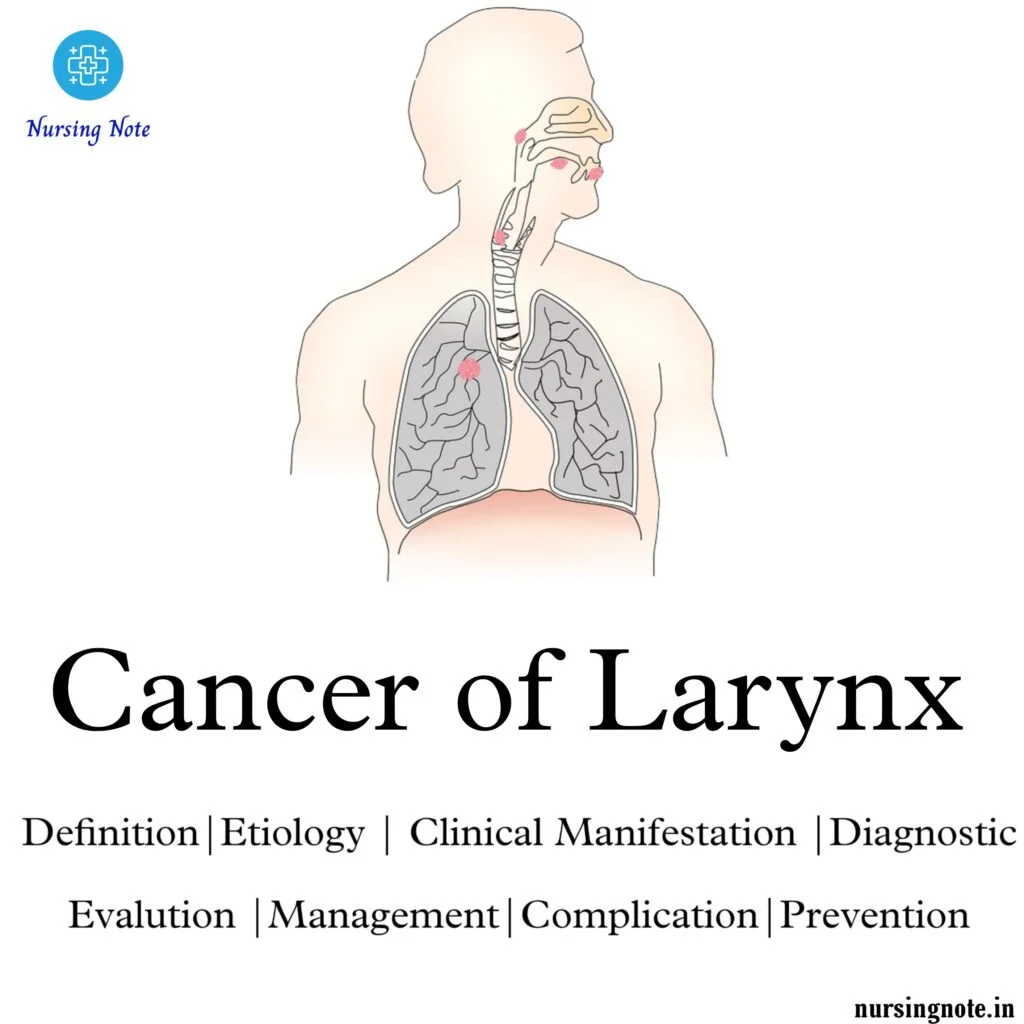
Cancer of Larynx or Laryngeal Cancer - 2nd Year GNM Medical Surgical Nursing II, Oncology Nursing(Definition,Etiology,Sign & Symptoms,Diagnosis,Treatment & Prevention)

CANCER OF LARYNX

Cancer of Larynx or Laryngeal Cancer - 2nd Year GNM Medical Surgical Nursing II, Oncology Nursing(Definition,Etiology,Sign & Symptoms,Diagnosis,Treatment & Prevention)

🔎Definition:

It’s defined as an abnormal or uncontrolled cell growth in any part of the larynx. It is also called Laryngeal Cancer.

🤔Etiology/Causes:

There are not any particular reasons for any types of cancer. It basically happens due to the mutation of DNA in our cells. That is why cancer is called an idiopathic disease.                             

⚠️Risk Factors:

Some common risk factors of the cancer of Larynx are described bellow:

⇢Age – Old age person above 60 to 70 years are more prone to Laryngeal Cancer.

⇢Chewing Tobacco – Chewing tobacco is a very bad habit that not only a worst causes for Laryngeal cancer but also for any other disease.

⇢Drinking Alcohol – Drinking alcohol is a risk factor for cancer.

⇢More risk for men – In surveys it is shown that male are more affected with Laryngeal Cancer as compared to the women.

⇢Chronic laryngitis – Untreated chronic laryngitis further can a cause for Laryngeal Cancer.

⇢Family History – A past family history with laryngeal cancer is a risk factor.

⇢Vocal Straining – Talking loudly like-singer, actor, teacher, public speaker who use their voice regularly may have vocal cord injury. This can lead to laryngeal cancer.

⇢Use sudden medication – Some type of medication and their side effects can leads to Laryngeal cancer.

⇢Nutritional deficiencies – Person with some nutritional deficiency may have the chances of laryngeal cancer.                    

🤧Sign and Symptoms/ Clinical Manifestation:

  1. Hoarseness
  2. Low pitched voice
  3. Difficulty in swallowing          
  4. Blood in spit
  5. Weight loss
  6. Fatigue
  7. Persistent cough
  8. Burning sensation
  9. Difficulty breathing
  10. Ear pain
  11. A sore throat
  12. A lump or sore that doesn’t heal    

𛲢Stages:

Cancer of Larynx or Laryngeal cancer stages are following:

▲Stage 0/Stage I: You have a single tumor in your Larynx.

▲Stage II: You have 2 or 3 tumors and it will be bigger in size than the first stage.The tumor may have spread to your blood vessels.

▲Stage III: In this stage, The tumor may have spread to your lymph nodes, large blood vessels or another organ.

▲Stage IV/Last Stage: In the last stage the cancer will spread to other organs in your body, such as your lungs or bones, as well as lymph nodes.

🩺Diagnostic Evaluations:

‣History collection              

‣Physical Examination

‣Endoscopy

‣Laryngoscopy

‣Biopsy

‣Imaging Tests

        X-ray
        CT scan
        MRI

‣Barium swallow or esophagogram – an Imaging test to show the abnormalities GI tract.

🏥MANAGEMENT:

⇒MEDICAL MANAGEMENT:-

5 Fluorouracil

Ibuprofen(Analgesic)

⇒SURGICAL MANAGEMENT:-

Partial Laryngectomy- Removal of half of the larynx

Total laryngectomy- Removal of full of larynx 

Cordectomy- Removes part or all off a vocal cord

Laser Surgery- Removes a tumor in a bloodless procedure

⇒Other Therapies:-       

Laser Beam- Using radiation it kills the cancer cells.

Chemotherapy – In this therapy chemotherapeutic medications are used to kill or slow the growth of cancer cells.

Immunotherapy – In this treatment health care providers improve our immune system to fight against cancer.

Targeted therapy- Cetuximab is a targeted cancer medicine. In this process medicine helps to stop the multiplication of particular cancer cells or targeted cancer cells.

😖Complication:

  • Spread of cancer
  • Larger tumour size
  • Increased pain and discomfort
  • Difficulty in treatment
  • Reduced quality of life

Liver Cancer – 2nd Year GNM Medical Surgical Nursing II, Oncology Nursing(Definition,Etiology,Sign & Symptoms,Diagnosis,Treatment & Prevention)

Illustration of liver cancer information

Liver Cancer

🔎Definition:

Liver cancer is also known as hepatic cancer, it is the abnormal cell growth or uncontrolled cell growth in liver or any part of liver.

Liver Cancer
Liver Cancer

🤔Etiology/Cause:

There is not any exact cause for any type of cancer that is why cancer is called as an idiopathic disease.

There are many chances of liver cancer which are described in the following as risk factors.

⚠️Risk Factor:

⇢Chronic infection by Hepatitis – Higher rates of liver cancer occur in those patients who have hepatitis B and C infection.

⇢Sex– Males are more often affected  with hepatocellular carcinoma (HCC) than females.

⇢Previous family history– some people with past family history of liver cancer have a increase risk for liver cancer

⇢Genetic cause-Liver cancer happens when liver cells develop changes (mutations) in their DNA of cells.

⇢Age– Old age person are more prone to liver cancer.

⇢Drink Alcohol– Drinking too much amount of alcohol is not good for health. It causes liver cirrhosis and later it transforms to hepatic cancer.

⇢Smoking – Is a greater cause for any types of cancer

Some medication- some oral contraceptive pill also be a risk factors

⇢Cirrhosis– Those person who have previous history of liver cirrhosis

⇢Aflatoxin– Aflatoxin exposure can lead to the development of HCC. The aflatoxins are a group of chemicals produced by the fungi Aspergillus flavus  and Aspergillus parasiticus.

⇢Bad Food Habit– Bad food habit and poor digestion can increase the chances for liver cancer

⇢Chemical Exposure– Certain chemical can also the causes for hepatic cancer

⇢Obesity and other metabolic disease can be the risk factor

🤧Sign and Symptoms/ Clinical Manifestation:

Nausea and vomiting

Sweating

Jaundice

Abdominal pain

Weakness

Fever

Diarrhoea

Splenomegaly – enlargement of spleen

Ascites – Excess abdominal fluid 

𛲢Stages:

Hepatocellular carcinoma or Liver cancer stages are following:

▲Stage 0/Stage I: You have a single tumor in your liver.

▲Stage II: You have 2 or 3 tumors and it will be bigger in size then the first stage.The tumor may have spread to your blood vessels.

▲Stage III: In this stage, The tumor may have spread to your lymph nodes, large blood vessels or another organ.

▲Stage IV/Last Stage: In the last stage the cancer will spread to other organs in your body, such as your lungs or bones, as well as lymph nodes.

🩺Diagnostic Evaluation:

  • History Collection
  • Physical Examination
  • CBC
  • LET(Liver Function Test) – To check if the enzyme, protein and other substance are working properly or not.
  • alpha-fetoprotein (AFT)– High levels of alpha-fetoprotein (AFP) in the blood can be found in many cases HCC
  • Ultrasound
  • CT scan & MRI
  • Angiography- A type of x-ray to show the blood vessles.
  • Biopsy

🏥Management:

  • Surgical Removal of tumor
  • Liver Transplantation – It is the process of placing a good and healthy liver from a healthy donor.
  • Heating Cancer cell- Killing cancer cells by controlled heat.
  • Freezing Cancer Cell- Shrinking malignant cells by too much cold temperature.
  • Injecting Alcohol into the tumor
  • Injecting Chemotherapy drug into cancer cell of liver 
  • Palliative Core

🛡️Prevention:

Reduces exposure to a risk factor for liver cancer.

Stop smoking and alcoholism.

Take healthy diet regularly.

Take vaccine against Hepatitis.


NursingNote.IN

NursingNote is a trusted platform for GNM & Nursing students, providing exam-oriented notes, PDFs, question papers, and career guidance to help you succeed confidently.

Quick Links

Legal