Be a NURSE Your Country Needs You
Cart (0)

GNM Annual Exam Question Paper May 2023 (KNC)

GNM Annual Exam Question Paper 2023 PDF

Download GNM Annual Exam Question Paper of 2023 in PDF here. It is a nursing PYQ of Karnataka Nursing Council (KNC). Quickly You can download the Question Paper by the downlink, all subjects pdf from are available here. These are the 2023 gnm question Which is important for your Anual Exam. You can Download GNM question paper 2023 pdf and practice.

GNM (General Nursing and Midwifery) is a 3-year based diploma course offered by INC (Indian Nursing Council) and approved by the State Nursing Board.
GNM Annual Exam Question Paper May 2023 (KNC)

Examination Details

  • FULL MARKS: 75
  • TIME: 3 Hours
  • DATE: MAY 2023

DOWNLOAD:

YEAR

SUBJECT

DOWNLOAD LINK

FIRST YEAR 

Bio-Science

  • (Anatomy and Physiology
  • Microbiology)

CLICK HERE

Behavioural Sciences

  • (Psychology
  • Sociology)

CLICK HERE

Nursing Foundations

  • (Fundamentals of Nursing
  • First Aid)

CLICK HERE

Community Health Nursing

  • (Community Health Nursing – I
  • Environmental Hygiene
  • Health Education and Communication skills
  • Nutrition)

CLICK HERE

SECOND YEAR

Medical Surgical Nursing – I

CLICK HERE

Medical Surgical Nursing – II

CLICK HERE

Mental Health Nursing

CLICK HERE

Child Health Nursing

CLICK HERE

THIRD YEAR

Midwifery and Gynecological Nursing

  • (Midwifery
  • Gynecologial Nursing)

CLICK HERE

Community Health Nursing – II

CLICK HERE

​”Looking for the latest papers? [Download the GNM Karnataka 2025 Question Papers Here]“

Breech Presentation: Definition,Type, Etiology and Mechanism for 3rd Year GNM A Complete Note

Definition of Breech Presentation:

Breech presentation is a fetal position during childbirth where the baby’s buttocks, feet, or both are positioned to emerge first, instead of the head.

In breech presentation, the lie is longitudinal and the podalic pole presents at the pelvic brim. It is the
most common malpresentation.

Frank Breech, Illustration of breech fetal positions: complete, incomplete, and footling breech.Complete Breech, Footling Breech, Kneeling Breech
Breech Presentations

Types of Breech Presentation

There are two varieties of breech presentation:
 

  • Complete
  • Incomplete

1. Complete Breech (Flexed Breech):

In a complete breech, the fetus maintains the normal attitude of full flexion.

  • Position: Thighs are flexed at the hips, and legs are flexed at the knees.
  • Presenting Part: Two buttocks, external genitalia, and both feet present at the birth canal.
  • Prevalence: This type is more common in multiparous women (those who have had previous deliveries), with an occurrence of about 10%.

2. Incomplete Breech:

An incomplete breech results from varying degrees of extension of the thighs or legs at the fetal pole. This type includes three distinct varieties:

A.Frank Breech:

  • Position: Thighs are flexed on the trunk, while legs are extended at the knee joints.
  • Presenting Part: Two buttocks and external genitalia only (without the feet).
  • Prevalence: The most common form of breech, especially in first-time pregnancies (primigravidae), accounting for around 70%. This is attributed to the firmer abdominal wall and higher uterine tone in primigravida, facilitating early engagement of the breech.

B. Footling Presentation:

  • Position: Both thighs and legs are partially extended, causing one or both feet to present at the birth canal.
  • Prevalence: Occurs in about 25% of breech presentations. Footling breech poses a higher risk for complications such as cord prolapse.

C. Knee Presentation:

  • Position: Thighs are extended, but knees are flexed, causing the knees to present at the birth canal.
  • Prevalence: This is the least common form of breech presentation

Etiology of Breech Presentation

  1. Prematurity: The most common cause, as the fetus may not have had time to turn head-down.
  2. Breech with Extended Legs: Extended legs make it difficult for the fetus to rotate.
  3. Twins: Limited space in multiple pregnancies restricts fetal movement.
  4. Oligohydramnios: Low amniotic fluid reduces fetal mobility.
  5. Congenital Uterine Abnormalities: Abnormalities such as a septate or bicornuate uterus restrict fetal movement.
  6. Short Umbilical Cord: A short cord limits fetal movement.
  7. Hydrocephalus: A large fetal head can fit better in the wide fundal area of the uterus.
  8. Placenta Previa: A low-lying placenta blocks the fetus from turning head-down.
  9. Contracted Pelvis: A smaller pelvic opening restricts fetal rotation.
  10. Hydramnios: Excessive amniotic fluid allows more fetal movement.
  11. Multiparity: Lax abdominal walls in women who have had multiple pregnancies increase fetal mobility.
  12. Genetic Conditions: Trisomies (13, 18, 21) can affect fetal muscle tone.

Diagnosis of Breech Presentation

A. Clinical Diagnosis:

Abdominal Palpation: Through Leopold’s maneuvers, the healthcare provider may detect the fetal head at the upper part of the uterus (fundus) and the buttocks or feet near the pelvic inlet.
Vaginal Examination: If labor has begun, a vaginal exam may reveal the fetal buttocks, feet, or genitalia as the presenting part instead of the head.
Auscultation: The fetal heartbeat is often heard above the mother’s umbilicus in breech presentation, rather than lower in the pelvis, as is typical in head-down (cephalic) presentations.

B. Sonography (Ultrasound):

Confirms the fetal position, assesses factors like amniotic fluid, placental location, and potential fetal abnormalities related to breech presentation.

Mechanism of Labor in Breech Presentation

In breech delivery, the primary movements occur in sequence for the buttocks, shoulders, and head:

A. Buttocks:

  • Engagement: The buttocks engage in an oblique diameter of the pelvic inlet, with the bitrochanteric diameter (10 cm) leading.
  • Descent: The buttocks descend until the anterior buttock reaches the pelvic floor.
  • Internal Rotation: The anterior buttock rotates behind the symphysis pubis.
  • Further Descent and Lateral Flexion: The anterior hip passes under the symphysis pubis, followed by the posterior hip, allowing trunk and lower limbs to deliver.
  • Restitution: The buttocks rotate back to their original oblique position.

B. Shoulders:

  • Engagement: The bisacromial diameter (12 cm) engages in the same oblique diameter as the buttocks.
  • Descent and Internal Rotation: Shoulders rotate into the anteroposterior diameter of the pelvic outlet as the trunk externally rotates.
  • Delivery: The posterior shoulder emerges first, followed by the anterior shoulder through flexion of the trunk.
  • Restitution and External Rotation: The shoulders rotate, aligning the fetal trunk in a dorsoanterior position.

C. Head:

  • Engagement: The head engages either in the opposite oblique or transverse diameter, with the suboccipitofrontal diameter (10 cm) leading.
  • Descent with Flexion: The head descends with increasing flexion.
  • Internal Rotation: The occiput rotates anteriorly, positioning behind the symphysis pubis.
  • Descent and Flexion for Delivery: The subocciput hinges under the symphysis pubis, and the head delivers by flexion, with the chin, mouth, nose, forehead, and occiput appearing successively.
  • Expulsion: Expulsion of the head relies on maternal bearing-down efforts, not on uterine contractions.

FAQs Section

  • The Most Frequently Asked Question related Breech Presentation are:
    • Q1: What is the most common type of breech presentation?
      A1: The frank breech is the most common, occurring in about 70% of cases.
    • Q2: What are the risks of breech delivery?
      A2: Risks include cord prolapse, head entrapment, and delivery complications.

GNM Previous Year Question Paper of Behavioral Sciences (Psychology & Sociology) Short Question and Answer for GNM 1st Year

Behavioral Sciences (Psychology & Sociology) Previous Year Short Question with Answer


GNM Previous Year Question Paper of Psychology and Sociology

Fill in the blanks:

1. ‘Psyche’ means __________ and ‘logos’ means
➡ Soul or mind
2. Habits are the form of ________ behavior
➡ Learned
3. Father of psychology is _________
➡ Wilhelm Wundt
4. False perception with external stimuli is _______
➡ Illusion
5. In patriarchal family _________ is the head of the family.
➡ Father
6. Scientific study of human population is_________
➡ Demography
7. Gathering of unorganized people is called as__________
➡ Crowd
8. The Father of Psychology is _________
➡ Wilhelm Wundt
9. __________ is a sensory experience in the absence of stimulus leading to false
perception.
➡ Hallucination
10. ____________ is the loss memory.
➡ Amnesia
11. Mental age indicates the level of _________
➡ Intellectual development
12. A type of marriage outside the groups is called ___________
➡ Exogamy
13. Embryonic period means __________
➡ From fertilization to the end of the 8th week of pregnancy
14. In __________ system the membership is determined by birth
➡ Caste
15. The Formula for calculating Intelligent Quotient (IQ) is ___________
➡ (Mental Age ÷ Chronological Age) × 100
16. Blaming others for their own mistake or failure is called __________
➡ Projection
17. Unattainable goals are important sources of __________
➡ Frustration
18. ____________ is the Institution which admits the man and woman to family life
➡ Marriage
19. The group of people living in a common area with common cultural patterns
is termed as _________
➡ Community
20. In __________ system the membership is determined by birth
➡ Caste

21. The following is an example for Motor activity
➡ Swimming
22. Trial and Error Theory of learning was proposed by
➡ Edward Lee Thorndike
23. The First stage of memory is
➡ Encoding
24. Fight or Flight theory was developed by
➡ Walter Bradford Cannon
25. The term Sociology is derived from Latin word ________ and Greek word ________
➡ Socius(Companion), Logos(Study)
26. Man is a __________ Animal
➡ Social
27. Face to face relation will be seen in __________
➡ Primary Group
28. The country which has highest population is _________
➡ China
29. Psychology is the study of ________
➡ Mind and behavior
30. Wrong perception in presence of external stimuli is called as____________
➡ Illusion
31. IQ of mild mental retarded person is ___________
➡ 50-70
32. _______is the loss of memory
➡ Amnesia
33.Sociology is the study of____________
➡ Society and social behavior
34. Dowry Prohibition act was passed by central Government in the year_________
➡ 1961
35. large number of people gathered in one place is called________
➡ Crowd
36. Father of sociology is ________
➡ Auguste Comte
37. ___________ is refereed as father of psychology
➡ Wilhelm Wundt
38. ___________ is also known as day dreaming
➡ Fantasy
39. ___________ attention does not require any conscious effort to attend to an object
➡ Involuntary
40. Formula for IQ___________
➡ (Mental Age ÷ Chronological Age) × 100
41. Society is formed by__________
➡ Social relationships and interactions among people
42. Difference on social phenomenon over a period is termed as __________
➡ Social change
43. Equal share to __________ on father’s property.
➡ Daughters
44. ___________is the unshakable false belief
➡ Delusion
45. False perception with presence of object is called___________
➡ Illusion
46. Classical conditioning theory of learning was proposed by _______________
➡ Ivan Pavlov
47. IQ of a moron is____________
➡ 51-70
48. The exploitation and maltreatment of children is called ___________
➡ Child abuse
49. An individual who becomes acculturated to the society is ___________
➡ Socialized
50. ____________ is referred as father of Sociology
➡ Auguste Comte

51. ____________is loss of memory
➡ Amnesia
52. Illusion is_________ perception in the presence of external stimuli
➡ False
53. Hunger motivates the person to seek__________
➡ Food
54. Mental age refers to _________ maturity of a person
➡ Intellectual
55. In __________group there is a face to face and intimate relationship exist among the members
➡ Primary
56. Immoral Traffic Act is to prevent__________
➡ Human trafficking and prostitution
57. _________is the Chief vehicle of culture transmission
➡ Language
58. Psychology is the study of ___________
➡ Mind and behavior
59. Thinking is a ____________ activity
➡ Cognitive
60. Defense mechanisms are also known as ________
➡ Adjustment mechanisms
61.The permanent or temporary loss of ability to recognize is called__________
➡ Agnosia
62. Study of population is called _________
➡ Demography
63. A man marries only one woman is called ___________
➡ Monogamy
64. ___________ is a major problem of marriage in India
➡ Dowry
65. The term psychology is derive from two Greek word ___________
➡ “psyche” (soul) and “logos” (study)
66. An essential factor in most frustrating situation are____________
➡ Obstacles to goals
67. A form of our learnt behaviour is called as ____________
➡ Habit
68. Sociology is the science of ________
➡ Society
69. Training the child in the culture of the group is known as _______
➡ Socialization
70. _______ is a temporary collection of people reacting together to stimuli
➡ Crowd
71. ___________ is also known as day dreaming
➡ Fantasy
72. ___________ is a mistaken perception that does of agree with the fact
➡ Illusion
73. ___________ means soul and mind
➡ Psyche
74. At attitude of respect towards the elders is _________
➡ Reverence
75. The great philosopher remarked that man is a social animal
➡ Aristotle
76. Large number of people gathered in one place is called
➡ Crowd
77. The special marriage act was passed by the Govt. of India in the year
➡ 1954
78. Initially psychology was considered as science of
➡ Soul
79. Emotion word was derived from
➡ Latin
80. Learning is growth through
➡ Experience
81. Formula for IQ
➡ MA/CA × 100
82. Genetic psychology also called as ________
➡ Developmental psychology
83. Excessive response to stimuli is known as ________
➡ Hyperactivity
84. In unconscious mind the conflicts are ________
➡ Repressed
85. Thinking is an __________ mental activity
➡ Internal
86. I.Q of an imbecile is ________ average
➡ 26-50
87. Habits are a form of our __________
➡ Learned behavior
88. Illusions are _________
➡ Misinterpretations of real external stimuli
89. The word Loci means method of _________
➡ Memory
90. Dowry prohibition act is passed on __________
➡ May 1, 1961
91. A man who marries two women is called ________
➡ Polygamy
92. Scientific study of human population is called_______
➡ Demography
93. _________ is due to lack of recalling something we learnt early
➡ Forgetting
94. Unattainable goals can be important sources of ___________
➡ Frustration
95. __________ are mistaken perceptions
➡ Illusions
96. __________ is a loss memory
➡ Amnesia
97. Is widely spread in tribal Society
➡ Illiteracy
98. Prostitution is a social problem and it due to
➡ Poverty
99. Urban Community means an area with
➡ High population density
100. Emotions are classified in to ________ and _________
➡ Positive and negative
101. Attitudes accompanied by strong feeling are called _________
➡ Emotions
102. Three types of habits are motar and bodly ________
➡ Mental
103. The term Embryo means
➡ Conception to 12 weeks of intra uterine life
104. The word family has been taken from
➡ Latin
105. One woman marries many men and lives with them as their wife
➡ Polyandry
106. One who shows deviation from normal behaviour is called _______
➡ Abnormal
107. Demography is the scientific study of _______
➡ Population
108. Prostitution is considered as one of the ________
➡ Social problems
109. Two types of economic aspects of individuals are _______ and ________
➡ Income and expenditure

GNM Supplementary Exam Question Paper August- 2024

GNM Supplementary Exam Question Paper August- 2024

GNM (General Nursing and Midwifery) is a 3 year based diploma course offered by INC (Indian Nursing Council) and approved by the State Nursing Board.

Karnataka board ksdneb gnm result 2023 previous year announced soon after exam. After that Karnataka Nursing Council conducted their supplementary exam of GNM at 30-07-2024 TO 03-08-2024.
all the question papers are below with download you can download and prepare for next exam.
Thumbnail of GNM Supplementary Exam Question Paper August-2024
🔥 Trending #1 📥 50K+ Downloads
📚✨🎯

GNM 1st Year Supplementary Papers Are Here! 🎉

Previous Year Questions with Answers • Karnataka Board • PDF Download • All Subjects Covered

🔥 Exam season is ON! Students are downloading right now — Don’t miss out! ⏰

✅ 100% Free 📱 Mobile Friendly 🎓 Nursing Notes

Examination Details

  • FULL MARKS: 70
  • TIME: 3 Hours
  • DATE: 30-07-2024 TO 03-08-2024

DOWNLOAD:

YEAR

SUBJECT

DOWNLOAD LINK

FIRST YEAR 

Bio-Science

  • (Anatomy and Physiology
  • Microbiology)

CLICK HERE

Behavioural Sciences

  • (Psychology
  • Sociology)

CLICK HERE

Nursing Foundations

  • (Fundamentals of Nursing
  • First Aid)

CLICK HERE

Community Health Nursing

  • (Community Health Nursing – I
  • Environmental Hygiene
  • Health Education and Communication skills
  • Nutrition)

CLICK HERE

SECOND YEAR

Medical Surgical Nursing – I

CLICK HERE

Medical Surgical Nursing – II

CLICK HERE

Mental Health Nursing

CLICK HERE

Child Health Nursing

CLICK HERE

THIRD YEAR

Midwifery and Gynecological Nursing

  • (Midwifery
  • Gynecologial Nursing)

CLICK HERE

Community Health Nursing – II

CLICK HERE

GNM Previous Year Question Paper of Bio Science (Anatomy, Physiology and Microbiology) Short Question and Answer for GNM 1st Year

GNM 1st Year Bio-Science Short Questions


Bio Science (Anatomy, Physiology and Microbiology) Previous Year Short Question with Answer


GNM Previous Year Question Paper of Bio Science (Anatomy, Physiology and Microbiology) Short Question and Answer for GNM 1st Year

Fill in the blanks:

1. Life span of RBC is ____________days.
➥ 120 Days
2. Suprarenal gland is otherwise known as________ .
➥ Adrenal Gland
3. The bones are connected to bones by_________ .
➥ Legaments
4. The heart is situated in the________ cavity.
➥ Thoracic Cavity
5. Which of the following is not an enzyme. ( i) Amylase ii) Pepsin iii) Stomatotropin iv) Trypsin )
➥ Stomatotropin

6. Which one of the following is not a part of small intestine. i) Caeccum ii) Duodenum iii) Jejunum iv) Ileum
➥ Caeccum
7. In which part of the human body find the islet of Langerhans.
➥ Pancreas
8. Adult human body consists of _______ number of bones.
➥ 206
9. ______ is the structure unit of Kidney.
➥ Nephron
10. ______ is the pacemaker of the heart.
➥Sinoatrial (SA) node
11. Enlargement of spleen is called as _______
➥Splenomegaly
12. Largest gland in our body is
➥ Liver
13. Power house of the cell is
➥ Mitochondria
14. In which part of the human body find the islet of Langerhans
➥ Pancreas
15. The blood is a _________ tissue.
➥ Connected
16. The retina is a _________layer of eye.
➥  Innermost
17. The space between lungs is called ________.
➥ Plural Space
18. Taste buds contain ________ receptors
➥ Gustatory cells
19. Rickets is caused by deficiency of
➥ Vitamin D
20. The longest bone in human body is
 ➥ Femur
21. Act of swallowing is called
➥ Deglutition
22. Suprarenal gland is also called as_________
➥ Adrenal gland
23. The organ of locomotion of bacteria is __________
➥ Flagellum
24. Tuberculosis is caused by _________  
➥ Mycobacterium tuberculosis
25. The end part of small intestine is ________
➥ ileum
26. The end products of carbohydrate metabolism are
➥ Monosaccharides 
27. The hormone which is secreted by thymus gland is
➥ Thymosin 
28. Penicillin was discovered by
➥Alexander Fleming
29. Left atrio-ventricular valve in the heart is also known as _______ valve
➥ mitral valve
30. The largest part of the brain is ______
➥ cerebrum
31. Leprosy is caused by ________
➥ Mycobacterium leprae
32. Best method of sterilization is ________
➥ Autoclaving
33. Inner most layer of the blood vessel is  
➥ Tunica intima
34. The Crania nerve responsible for Sense of smell is
➥Olfactory 
35. Bone forming cell are called as
➥Osteoblasts 
36. The main artery supplying to the brain is
➥ Circulus arteriosus
37. Middle layer of heart is called as _________
➥ Myocardium
38. Cholera is caused by __________  

➥ Vibrio cholerae

39. The smallest bone in human body is __________

➥ Stapes

40. __________ is largest lymphatic organ
➥ Spleen
41. Normal duration of cardiac cycle is  
➥ 0.8 seconds
42. The acid-fast bacteria is
➥ Mycobacterium tuberculosis
43. The first part of large intestine is
➥ Caecum 
44. Space between the two lungs in the thoracic cavity is known as ___________
➥ Mediastinum
45. Supra renal gland is also called as _________  
➥ Adrenal gland
46. Insulin is secreted by ___________ cell of the pancreas
➥ beta
47. __________ is the covering membrane the bone
➥ Periosteum
48. The movable bone in the skull is _________
➥ Mandible
49. Temporary teeth begin to erupt at the age of ________
➥ 6 year
50. The largest part of the brain is _______
➥ Cerebrum 
51. The first phase of cell division is _______
➥ prophase
52. ___________ is the hormone secreted by Thymus gland
➥ Thymosin
53. The life span of RBC is _____________ days.
➥ 120 days
54. ___________ is called as the power the house of the cell
➥ Mitochondria
55. Typhoid is caused by____________
➥ Salmonella Typhi
56. Tear producing gland are
➥ Lacrimal
57. The fertilization takes place in the
➥ Fallopian tube
58. The pace maker of the heart is
➥S A Node
59. The organ of taste is
➥ Tongue
60. Blood vessel which carry blood away from the heart to different parts of The body are called_________
➥ Veins
61. __________nerve is the first cranial nerve of our body
➥ Olfactory
62. ___________is called as the voice box of human body
➥ Larynx
63. The main artery in the human body is_______
➥ aorta
64. The body power to resist infection is called  
➥ Immunity
65. Axon is covered by a membrane called
➥ Axolemma 
66. The thoracic cage consists of
➥ 12 pairs of ribs
67. Endocrine glands secrete
➥ Hormones
68. ___________is the largest gland in Human body.
➥ Liver
69. ___________is the membrane covering brain and spinal cord.  
➥ Meninges
 c) The bone of the lower law is called_________  

➥ Mandible

70. Leprosy is caused by___________
➥ Mycobacterium leprae
71. The power house of the cell is_________
➥ Mitochondria
 72. Blood vessels which carry blood towards heart are called________  
➥ Veins
73. Tuberculosis is caused by___________
➥ Mycobacterium tuberculosis
74. ________ is second cervical vertebra
➥ Axis
75. ________ is the covering membrane of the nerve  

➥ Myelin sheath

76. ________ is the inner most layer of the uterus
➥ Endometrium
78. Buccinator is ________ in cheek
➥ muscle
79. Eyelids protect eye from __________
➥ Foreign body
80. Muscle cells are specialized from _________
➥ myoblasts
81. __________is the functional unit of the kidney
➥ nephron
82. _________is the respiratory organ
➥ Lungs
83. Exocrine gland secret __________
➥ Enzymes
84. Space between two lungs is called as ___________
➥ Mediastinum
85. Receptors for bright light and colour vision is __________
➥ Cone cells
86. Tall of the spinal cord is called as ___________
➥ coccyx
87. The innermost layer of Brain is.
➥Piamater
88. The fertilized Ovum is called as
➥Zygote
89. Brain and Spinal cord are the parts of
➥Central Nervous system
90. The __________ is the largest bone of the foot
➥ calcaneus
91. The Bat shaped bone is ________ bone
➥ sphenoid
92. Thread like structures arising from cytoplasm and
 extending out through cell wall is called __________
➥ GolgyBodies
93. The middle layer of heart is ________
➥ myocardium
94. Growth of microorganisms in the presence of oxygen.
➥Aerobic
95. The inner most layer of the Uterus is
➥Endometrium
96. Electron Microscope is discovered by
➥Ruska
97. Blood is a ___________ tissue.
➥ Connective
98. Smallest bone in human body is ___________
➥ Stapes
99. Normal clotting time is ______________
➥ 11–13.5 seconds
100. Appendix is a __________organ.
➥ Vestigial
101. Zygomatic bone is known as _________
➥ Cheekbone
102. Bicuspid valve is also known as ________
➥ Mitral valve
103. Capacity of urinary bladder is ________
➥ 400–700 milliliters
104. The presence of viruses in the blood is called _________
➥ Viremia
105. Daily secretion of saliva is __________
➥ between 0.5 and 1.5 liters.
106. Myopia is caused by _________
➥ abnormal shape of cornea
107. Malaria is caused by ________
➥ Plasmodium vivax
108. The mode of transmission of viral hepatitis A is _____________
➥ fecal-oral route,
109. Hyperthyroidism with toxic effects is called ___________
➥ thyrotoxicosis
110. The smallest functional unit of the body is _________
➥ Cell
111. Diehl Nielsen staining is used for ___________
➥ identify acid-fast bacteria
112. Respiratory centre is situated in the _________
➥ brainstem
113. Weight of kidney is ________
➥ 120 and 150 grams
114. Specific gravity of C.S.F. is ______
➥ between 1.004 and 1.003
115. Carpal or wrist bones consists of
➥ Eight Bones
  1. Scaphoid (boat-shaped)
  2. Lunate (crescent moon-shaped)
  3. Triquetrum (pyramidal)
  4. Pisiform (pea-shaped)
  5. Trapezium (irregular trapezium-shaped)
  6. Trapezoid (wedge-shaped)
  7. Capitate (head-shaped)
  8. Hamate (wedge-shaped with a bony extension or ‘hook’)
116. The name of 10th cranial neve is
➥Vagus
117. The second cervical vertebrae are
➥Axis
118. Cell was discovered by ________
➥ Robert Hooke
119. Laryngeal prominence is called ________
➥ Adam’s apple
120. Smallest bone in human body is ________
➥ stapes
121. The presence of virus in blood is called _________
➥ viremia
122. The blood group that is universal recipient is _________
➥ AB positive (AB+)
123. The hardest substance in the body is
➥Enamel
124. One of the muscles of mastication is
➥ Pterygoideus lateralis
125. Body temperature is regulated by
➥Hypothalamus

Factors Affecting Human Growth and Development

Illustration of growth and development factors.

Factors Affecting Human Growth and Development

Introduction:

Human Growth and Development are very closely related to each other. Growth and Development is a continuous and elderly process.
Difference of Growth and Development

Definition:

➦ Growth:

Growth is change in size, in proportion, disappearance of old features and acquisition of new ones.

— (Hurlock)

➦Development:

Development means a progressive series of changes that occur in an orderly predictable pattern as a result of maturation and experience.

— (Hurlock)
 

Difference of Growth and Development:

Aspect

Growth

Development

Definition

Increase in size and mass of an organism.

Improvement in complexity and functionality.

Measurement

Quantitative (height, weight, size).

Qualitative (skills, capabilities, maturity).

Nature

Physical changes only.

Includes physical, cognitive, emotional, and social changes.

Timeframe

Limited to a certain period (e.g., childhood).

Continuous process throughout life.

Examples

Increase in height, weight, organ size.

Learning new skills, emotional maturity, social relationships.

Factors Influencing

Nutrition, genetics, health conditions.

Education, environment, life experiences.

Focus Area

Biological aspect.

Holistic aspect (biological, psychological, social).

Reversibility

Generally irreversible after a certain point.

Can be reversible (skills can be lost or regained).

Impact on Individual

Affects physical body.

Affects overall personality and capabilities.

Dependency

Can occur without significant cognitive changes.

Often requires cognitive and emotional involvement.

Indicators

Height, weight, organ growth charts.

Milestones in learning, emotional responses, social skills.

Factors that Affect Groth and Development:

Major factors are involved that affect human growth and development those can be biologically, environmentally or on the bases of human lifestyles. All the factors are explained in the points below-

1. Biological Factors:

    A. Genetics:

Genetic inheritance plays a significant role in determining physical traits such as height, eye colour, hair type, and even predisposition to specific health conditions.

    B. Hormones:

    All the hormones play a crucial role in the development of the body, like Growth Hormone (GH), which is responsible for the growth of the body by effecting metabolism, Gonadotropin Hormones (GTH) effects the growth during puberty etc.

    C. Parenteral  Factor:

    The nutritional status of a mother, the size of the womb and exposure to any harmful substance during pregnancy can have a lasting effect on growth and development.

2. Environmental Factors:

    A. Nutrition:

    Nutrition provides the necessary raw materials for growth. A balanced diet is essential for supporting immune function, cognitive development, and overall health.

    B. Environmental Conditions:

    Environmental factors such as pollution, climate, and housing conditions can significantly impact the growth and development of a human.

    C. Physical Activity:

    Regular physical activity helps to gain muscle strength, bone density, and cardiovascular fitness, while also providing an outlet for energy release and stress reduction

3. Socioeconomic Factors

    Social Status:

    Socioeconomic factors like living conditions, education, income, and access to healthcare can strongly influence growth and development. Higher socioeconomic status often translates into better access to nutritious food, safer living environments, quality education, and healthcare.

4. Other Factors

    A. Sex:

    The sex of an individual can influence physical growth and development, with boys generally being taller and physically stronger than girls, and girls maturing faster during adolescence.

    B. Family Dynamics:

    Family relationships and dynamics can impact a child’s emotional and socio-emotional development.

Definition of Blood. Blood Components and it’s Functions

Diagram of blood components and functions

Blood

Definition (What is blood?):

Blood is a red colour viscous fluid, found in the cardiovascular system that carries oxygen, nutrition and carbon dioxide to cells throughout your body.
A fit normal human have arround 5 liters blood in their body.
Color range
Oxygen-rich blood is scarlet red
Oxygen-poor blood is dull red
pH must remain between 7.35-7.45
Slightly alkaline
Blood temperature is slightly higher than body temperature

Components Of Blood:

The main components of blood are classified below:

Blood is composed of several components that are classified on the above picture, each have their own functions:

Red Blood Cells (Erythrocytes):

1. RBCs are one of the primary cellular components of blood.

2. RBCs are biconcave, disc-shaped cells with a depressed centre, maximizing their surface area-to-volume ratio for efficient gas exchange.

3. RBCs contain haemoglobin, a complex protein composed of globin (protein) and heme (iron-containing pigment). Responsible for transporting oxygen from the lungs to body tissues and carrying carbon dioxide from tissues to the lungs for exhalation.

White Blood Cells (Leukocytes):

1. WBCs Play a crucial role in the immune system’s defence against pathogens.
2. Include several types such as neutrophils, lymphocytes, monocytes, eosinophils, and basophils, each with specific functions in immunity.

Platelets (Thrombocytes):

1. Platelets are small, colourless cell fragments found in the bloodstream involved in blood clotting.
2. Form clots to prevent excessive bleeding when blood vessels are injured.

Plasma:

1. Plasma are a yellowish fluid component of blood, constituting about 55% of its volume. It contains water, electrolytes, proteins (albumin, globulins, fibrinogen), hormones, nutrients, and waste products.
★ Normal Level Of Blood Components in Human Body:

Blood Component

Normal Range

Red Blood Cells (RBCs)

Male: 4.5 – 5.9 million cells/μL

Female: 4.0 – 5.2 million cells/μL

White Blood Cells (WBCs)

4,500 – 11,000 cells/μL

Platelets

150,000 – 400,000 platelets/μL

Plasma

Constitutes about 55% of total blood volume

Functions of Blood:

    ★ Transport Function:

  1. RBC carries O2 from the lungs to the rest of the body.
  2. Nutrients, such as glucose, amino acids, and fatty acids are transported to cells for energy and other metabolic processes.
  3. In the human body hormones are secreted by some endocrine glands and those hormones are also transported by blood to the other cells, tissues and organs.
  4. Blood carries metabolic waste products, such as carbon dioxide and urea, away from cells to be eliminated through the lungs and kidneys, respectively.

    ★ Immunity Function:

    1. White blood cells (leukocytes) play a crucial role in the immune system by defending the body against pathogens, such as bacteria, viruses, and fungi. They multiply rapidly during infections.

        ★ Thermoregulation Function:

      1. Blood helps to maintain body temperature by re-distributing heat to the whole body.

      Cervical Cancer – 2nd Year GNM Medical Surgical Nursing II, Oncology Nursing(Definition,Etiology,Sign & Symptoms,Diagnosis,Treatment & Prevention)

      Cervical cancer educational topics listed

      Cervical Cancer


      🔎Definition:

      Cervical cancer is the abnormal cell growth or proliferation cell of any part of the cervix or on the wall of the cervix.
      Cervical Cancer - 2nd Year GNM Medical Surgical Nursing II, Oncology Nursing(Definition,Etiology,Sign & Symptoms,Diagnosis,Treatment & Prevention)

      🤔Etiology/Causes:

      Cancer is an idiopathic disease, it has not any particular or proper causes but most cervical cancer is caused by HPV (Human Papillomavirus) virus. HPV spread through sectual contact, multiple sex partner & unprotedcted sex.

      ⚠️Risk Factors:

      Some common risk factors of the cancer of cervix are described bellow:

      ⇢Age – Old age person above 60 to 70 years are more prone to Cervical Cancer.⇢Chewing Tobacco – Chewing tobacco is a very bad habit that is not only a worst causes for Cervical Cancer but also for any other disease.

      ⇢Drinking Alcohol – Drinking alcohol is a risk factor for cancer.

      ⇢Multiple Sex Partner – Multiple sex partner and unprodected sex can causes Cervical Cancer.

      ⇢Family History – A past family history with Cervical cancer is a risk factor.

      ⇢Use sudden medication – Some type of medication and their side effects can leads to Cervical cancer.

      ⇢Nutritional deficiencies – Person with some nutritional deficiency may have the chances of Cervical cancer.

      🤧Sign and Symptoms/ Clinical Manifestation:

      Some common signs and symptoms that a woman may face during cervical cancer are:

      1. Unusual vaginal bleeding
      2. Painful sex
      3. Unpleasant vaginal smell
      4. Bleeding after menopause
      5. Irregular menstrual
      6. Leg pain
      7. Back pain
      8. Pelvic pain
      9. Weight loss
      10. Fatigue
      11. Painful Urination
      12. Blood in urine
      13. Urinary Incontinence(UI)

      ∞Stages:

      Cancer of cervix or Cervical cancer stages are following:

      ▲Stage 0/Stage I: You have a single tumor in your Cervix.

      ▲Stage II: You have 2 or 3 tumors and it will be bigger in size than the first stage. The tumor may have spread to your blood vessels.

      ▲Stage III: In this stage, The tumor may have spread to your lymph nodes, large blood vessels or another organ.

      ▲Stage IV/Last Stage: In the last stage the cancer will spread to other organs in your body, such as your lungs or bones, as well as lymph nodes.

      🩺Diagnostic Evaluations:

      1. History Collection
      2. Physical Examination
      3. Liver and Urine Function Test
      4. Blood Test
      5. Urine Test
      6. HPV Test
      7. Pap smear Test
      8. Imaging Test
        1. X-Ray of the pelvis
        2. CT KUB
        3. MRI
      9. Biopsy

      🏥MANAGEMENT:

              ⇨ Medical Management:

      Chemotherapy
      Targeted Therapy
      Immunotherapy

              ⇨ Surgical Management:

      Hysterectomy
      Laser Surgery
      Cryosurgery
      Pelvic Exenteration

              ⇨ Non-invasive Management:

      Radiation Therapy

      🛡️Prevention:

      • Get the HPV vaccine ( After 15 and before 45 age).
      • Use condoms or other barrier methods when you have sex.
      • Limit your sexual partners.
      • Stop smoking and using tobacco products.

      GNM Previous Year Question Paper of Medical Surgical Nursing 1 Short Question and Answer for GNM 2nd Year

      GNM Previous Year Question Paper of Medical Surgical Nursing 1 Short Question and Answer for GNM 2nd Year

      Medical Surgical Nursing 1 Previous Year Short Question with Answer


      Fill in the blanks:

      1. Normal level of potassium in the blood is _____________
      ➡3.6 to 5.2 (mmol/L)
      2. Presence of protein in the urine is called as ______________
      ➡Proteinuria
      3. Difficulty in swallowing is called as ________________
      ➡Dysphagia
      4. Abnormal accumulation of fluid in the peritoneal cavity is called as _______________
      ➡Ascites

      5. __________ is the inflammation of the Gums
      ➡ Gangivitis
      6. Decrease level of potassium in the blood is called as __________
      ➡Hypokalemia
      7. __________ is Inflammation of the gall bladder
      ➡Cholecystitis
      8. ______________is a sudden temporary loss of consciousness
      ➡Syncope / Fainting
      9. Presence of protein in urine is called as ___________
      ➡ Proteinuria
      10. Incrcase in serum sodium level is called __________
      ➡ Hypernatremia
      11. Difficulty in swallowing is called __________
      ➡ Dysphagia
      12. _________ position will be an ideal for perineal and rectal surgeries
      ➡ Lithotomy
      13. Otoscope is used to examine________________
      ➡ Ear
      14. Rheumatoid arthritis mainly affects________________
      ➡ Joint
      15. An example for Autoimmune disease is________________
      ➡ Systemic Lupus Erythematosus
      16. Collapse of the lung is called as ___________
      ➡ Pneumothorax
      17. Decrease in the number of platelets is known as ____________
      ➡ Thrombocytopenia
      18. Normal level of Sodium in blood is _________
      ➡ 135-145 mEq/L
      19. Epistaxis means __________
      ➡ Nose bleeding
      20. Yellowish discolouration of the skin is found in________________
      ➡ Jaudice
      21. The following instrument is used for the examination of eye________________
      ➡ Ophthalmoscopy
      22. Salt is restricted to the patient with________________

      ➡ Hypertension
      23. Normal serum calcium level is ____________
      ➡ 8.5 to 10.5 mg/dl
      24. Instrument used to check reflex is ___________
      ➡ Reflex hammer
      25. Spinal anaesthesia is a type of __________ anaesthesia
      ➡  Regional Anaesthesia
      26. Antibody mediated immunity is also called as __________
      ➡Humoral immunity
      27. The first cranial nerve is________________
      ➡Olfactory
      28. The procedure used to visualise internal organs is________________
      ➡Endoscope
      29. Blood in the sputum is termed as________________
      ➡Haemoptysis
      30. Deceased potassium level in the blood is called _________
      ➡ Hypokalemia
      31. Inflammation of the lining of the stomach is called _________
      ➡ Gastritis
      32. Inflammation of the nose is called _________
      ➡ Rhinitis
      33. An artificial device used to replace a missing body part such as a limb or heart valve is ___________
      ➡ Prosthesis
      34. Master gland of the body is________________
      ➡ Pituitary gland
      35. Total number of cranial nerves are________________
      ➡ 12 pairs
      36. Position used for surgeries on the spinal cord ________________
      ➡ Prone
      37. An abnormal connection between the organ is called as ___________
      ➡ Fistula
      38. Paracetamol is a _____________ drug
      ➡ Antipyretic
      39. Inflammation of the gall bladder is called _____________
      ➡ Cholecystitis
      40. Normal concentration of potassium in serum is ___________
      ➡ 3.5 to 5.5 mEq/L
      41. Decreased pulse rate is termed as ________________
      ➡ Bradycardia
      42. HS means ________________
      ➡ At Bedtime
      43. Gastric juice contain ________________
      ➡ Pepsin lipase and Renin
      44. An abnormal decrease in the number of platelets is called ____________
      ➡ Thrombocytopenia
      45. Inflammation of the lung parenchyma is termed as ____________
      ➡ Pneumonitis
      46. The action of paracetamol drug is ____________
      ➡ Analgesic and antipyretic drug
      47. ____________ position is ideal for perineal and rectal surgeries
      ➡ Lithotomy
      48. Decreased potassium level in blood is termed as ________________
      ➡ Hypokalaemia
      49. Salt is restricted to a patient with ________________
      ➡ Oedema
      50. Drug used in Epilepsy is ________________
      ➡ Eptoin
      51. __________ is the enlargement of the Liver
      ➡ Hepatomegaly
      52. Decreased sodium level in the body is called as ________
      ➡ Hyponatremia
      53. Tuberculosis is caused by _________
      ➡ Mycobacterium tuberculosis
      54. ___________ is the Increase of the number of cells resulting from increased cellular division
      ➡ Proliferation
      55. ___________ is the inflammation of the gums
      ➡ Gangivitis
      56. Decrease secretion of antidiuretic hormone causes _________
      ➡ Diabetes insipidus
      57. Antidote of Heparin is ________________
      ➡ Protamine sulphate
      58. The following chemical is used for fumigation of operation theatre ________________
      ➡ Formaldehyde
      59. The following instrument is used for the examination of Bladder ________________
      ➡ Cystoscope
      60. Normal pH of blood is ___________
      ➡ 7.35 to 7.45
      61. Collection of pus in pleural cavity is called __________
      ➡ Empyema
      62. Collapse of lungs is called as ____________
      ➡ Pneumothorax
      63. An abnormal decrease in the number of platelets of platelets is called _____________
      ➡ Thrombocytopenia
      64. Senior citizen’s day is celebrated on ____________
      ➡ August 21
      65. Dyspnoea is released in ________ position
      ➡ Upright position
      66. Fat consumption in elderly should be ___________
      ➡ 20-35% of their daily calories
      65. Pain is _________ vital sign
      ➡ 5th
      66. Normal value of calcium is ____________
      ➡ 8.6 to 10.3 mg/dL
      67. Suture materials used for tendons __________
      ➡ Catgut
      68. The first India Medical Physician is ____________
      ➡ Anandi Bai Joshi
      69. The normal BUN level is __________
      ➡ About 7 and 20 mg/dL
      70. When the Lasix is administered to patient ___________ is given as a supplement
      ➡ Potassium
      71. The purpose of post-operative deep breathing coughing exercises are to prevent _________
      ➡ Pneumonia
      72. Decreased level of potassium in the blood is called as __________
      ➡ Hypokalemia
      73. Disengagement theory explains about _________
      ➡ Ageing
      74. Dyspnoea is relived in _________
      ➡ Upright position
      75. Damage to the air sacs in the lungs is called as:
      ➡Emphysema.
      76. Inflammation and infection of the salivary gland is known as:
      ➡Sialadenitis.
      77. ___________ are abnormal enlarged veins in the lower part of the esophagus:
      ➡Esophageal varices.
      78. Formation of stone in the gall bladder is known as:
      ➡ Cholelithiasis.

      Read More: Mental Health Nursing Previous Year Short Question with Answer

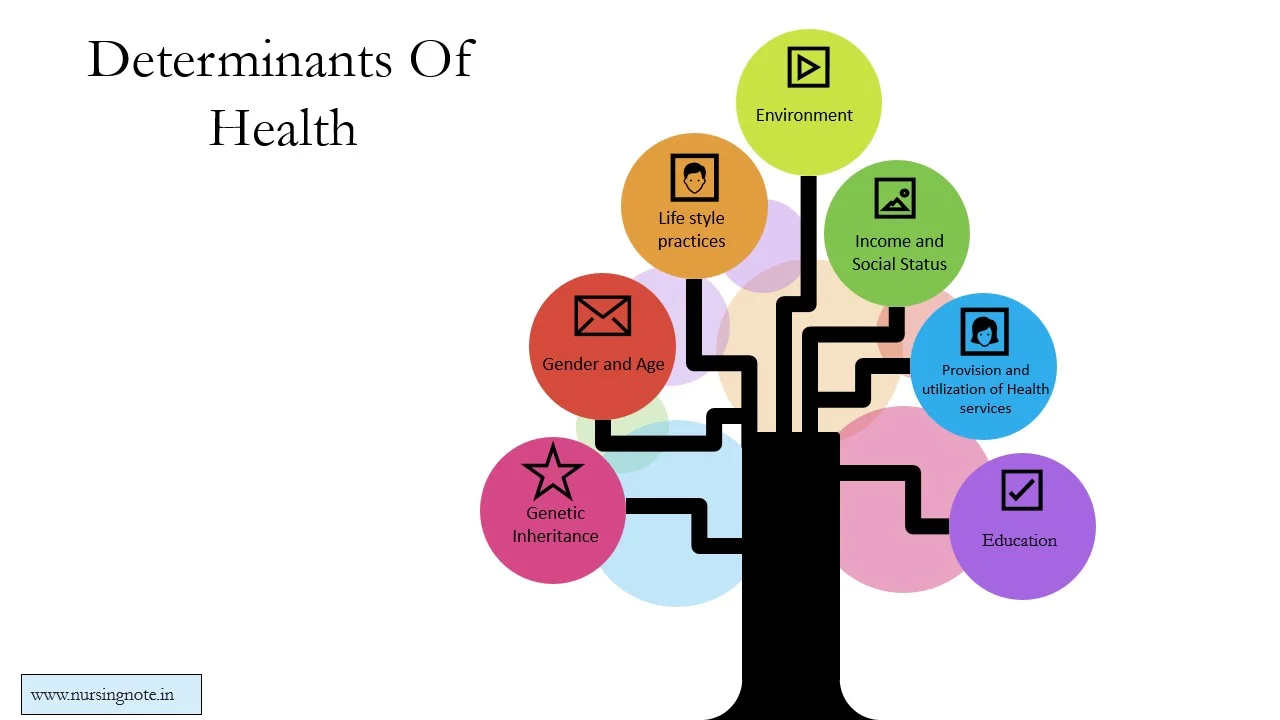
      Determinants of Health

      Tree diagram of health determinants.

      Determinants of Health

      determinants of health ppt

      Health is a multi-dimensional phenomenon and many factors combined to influence the health of individuals. The common factors that influence health are:

      1. Genetic Inheritance:

      Genetic factors plays an important role in determining the health of the people. Errors in the genetic make-up leads to many types of diseases and conditions such as mental retardation and error of metabolism.

      2. Gender and Age:

      The age of the individual will influence the health status. Young infants and the elderly are prone to various health related issues. There is a change in physical, social psychological health due to developmental changes. Similarly, there are some diseases that are common only in females or in males, for e.g. cardiac diseases are more commonly affects men as compared to females. Hence, gender is one of the indicator in equalities of health.

      3. Life style practices:

      Life style factors, i.e. ways of living such as social values, attitudes and activities and cultural patterns determine individual’s state of health. The lifestyle practice usually includes diet, physical activity, tobacco, alcohol or drug intake.

      4. Environment:

      Environment includes internal environ- ment and external environment. Internal environment pertains to each and every component, i.e. tissue, organs, organ system and their harmonious functioning within human system. External environment refers to all those factors surrounding human and which influence his health, biological, physical and psychosocial factors. If environmental factors are favorable to individual, he will be healthy whereas unhealthy environment affect individual’s physical, social and mental well being.

      5. Income and Social Status:

      Higher income and social status is associated with better health. When people do not have adequate finances they cannot be able to use the health care facilities. So, economic status is a major factor in reducing the morbidity, increasing life- expectancy and improving the quality of life.

      6. Provision and Utilization of Health Services:

      Health services are essential for social and economic develop- ment besides prevention of disease promotion of health and treatment of diseases. Maternal and child health services, family welfare services, national health programmes all contribute to health of people and re- duce morbidity and mortality.

      NursingNote.IN

      NursingNote is a trusted platform for GNM & Nursing students, providing exam-oriented notes, PDFs, question papers, and career guidance to help you succeed confidently.

      Quick Links

      Legal